Metal remains important in restorative dentistry because it can provide the strength and structural stability required for crowns, bridges, denture frameworks, implants, and other dental components. However, material choice also affects restoration weight, rigidity, corrosion behavior, biocompatibility, and long-term use.
Today, cobalt-chrome alloy and titanium alloy are two of the most commonly used metal printing materials. Both can be processed through dental metal 3D printing.
What’s the difference between the two materials for dental uses? Read on for more information.
What is Cobalt-Chromium?
Cobalt-chromium, often written as CoCr, is a metal alloy composed primarily of cobalt and chromium, with small amounts of tungsten and molybdenum depending on the formulation.
In dentistry, cobalt-chromium alloys have been used for decades to fabricate durable prosthetic restorations. The alloy is free from harmful elements, making it safe for intraoral use.
1. Material Properties of Cobalt-Chromium
- High strength and hardness: Cobalt-chromium alloys exhibit high tensile strength after selective laser melting. This makes them rigid enough to produce frameworks and partial dentures.
- Wear resistance: The hardness of cobalt chromium contributes to strong resistance against surface wear. Restorations maintain their shape and surface finish over years of function, even in high-stress bite zones.
- Corrosion resistance: Chromium content creates a passive oxide layer on the alloy surface. This layer protects the metal from saliva, acids, and other corrosive agents in the oral environment.
2. Common Dental Applications of Cobalt-Chromium
Cobalt-chromium is widely used across restorative dentistry:
- Crowns and bridges: A cobalt-chromium crown serves as either a full-metal restoration or the metal substructure in metal-ceramic restorations. The alloy bonds well with dental porcelain.
- Denture frameworks: A cobalt-chromium denture framework is the common choice for removable partial dentures. The alloy’s rigidity allows thin, lightweight clasps and major connectors that maintain retention.
- Inlays: CoCr inlays restore posterior teeth where strength is critical.
- Posts and cores: The alloy provides a rigid foundation for crowns on endodontically treated teeth.
- Orthodontic appliances: CoCr is also used for orthodontic wires and functional appliances because of its spring-back properties.
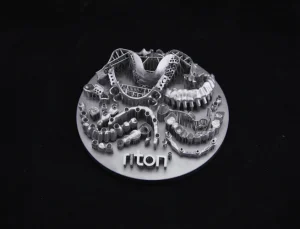
What is Titanium?
Titanium is a metallic element known for its high strength-to-weight ratio and biocompatibility. In dentistry, titanium appears in two main forms: pure titanium and titanium alloys.
- Pure titanium contains 99% or more titanium by weight. It offers excellent biocompatibility and corrosion resistance but has lower mechanical properties than titanium alloys.
- Titanium alloy (TC4) adds aluminum and vanadium to improve tensile strength and fatigue resistance. For 3D-printed dental prosthetics, TC4 is the preferred titanium material.
1. Material Properties of Titanium
- Lightweight: Titanium has a much lower density than CoCr. This weight advantage translates to lighter restorations and greater patient comfort.
- التوافق الحيوي: Titanium is the most biocompatible metal used in dentistry. It forms a stable oxide layer (TiO2) that integrates well with bone tissue. This makes it perfect for dental implants.
- Corrosion resistance: Like cobalt-chromium, titanium resists corrosion through anoxide layer (TiO2).
2. Common Dental Applications of Titanium
Titanium serves a broader range of applications than many other dental metals:
- Dental implants: Titanium is the gold standard for endosseous implants.
- Implant abutments: Custom titanium abutments connect implants to prosthetic crowns and are increasingly produced through 3D printing.
- Maxillofacial reconstruction: Titaniumis used in jaw reconstruction surgery due to its biocompatibility and mechanical strength.
- Crowns and bridges: A titanium crown offers a hypoallergenic alternative for patients with metal sensitivities.
- Denture frameworks: Titanium denture frameworks are lighter than cobalt-chromium alternatives, improving comfort for patients who wear removable prostheses.
- Inlays: Titanium inlays serve patients who need metal restorations but have allergies to other alloys.
- Posts and cores: Titanium posts are valued for their elasticity, reduces root fracture risk.
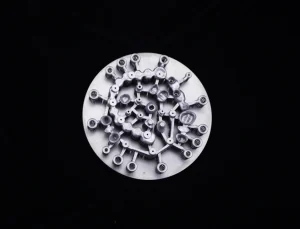
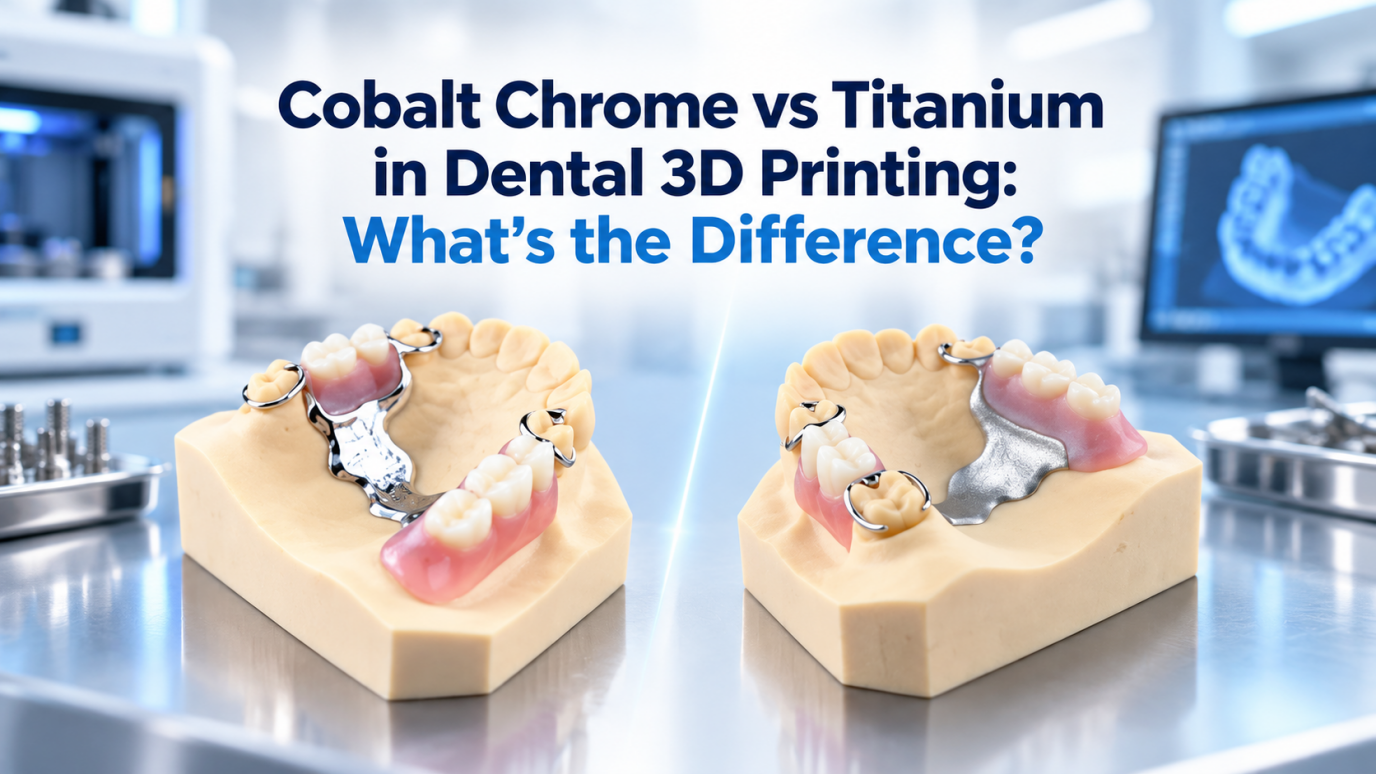
Cobalt Chrome vs Titanium in Dental 3D Printing
When comparing cobalt chrome vs titanium for dental 3D printing, the differences become clear across several performance categories, including:
الخاصية | كوكرا | التيتانيوم |
Composition | Cobalt, chromium, with a small amount of tungsten and molybdenum | Pure Ti or Ti alloyed with elements such as Al and V |
الوزن | Higher density; heavier | Lower density; lighter |
Strength | High strength and high rigidity | High strength with a favorable strength-to-weight ratio |
Corrosion Resistance | Strong, due to chromium oxide layer | Strong, due to titanium dioxide layer |
Wear Resistance | Higher surface hardness; better wear resistance | Lower surface hardness; moderate wear resistance |
التوافق الحيوي | Good | Excellent; main option for implants |
Cost | Lower raw material cost; more affordable for high-volume production | Higher raw material cost; higher per-unit price |
Dental Applications | Crowns, bridges, denture frameworks, inlays, posts, orthodontic appliances | Implants, abutments, maxillofacial prostheses, crowns, bridges, denture frameworks |
Cobalt Chrome vs Titanium: How to Choose?
The decision between cobalt chromium vs titanium depends on the clinical situation.
1. Choose cobalt-chromium when:
- The restoration is a crown, bridge, or removable partial denture framework where rigidity and wear resistance are priorities.
- Metal-ceramic bonding is needed. Cobalt-chromium bonds effectively with dental porcelain.
- Cost is a primary concern. CoCr alloy powder costs less in high-volume dental laboratories.
- The patient has no known metal sensitivities to cobalt or chromium.
2. Choose titanium when:
- The restoration involves implants or implant-supported prostheses where biocompatibility matters.
- The patient has a history of metal allergies. Titanium is hypoallergenic.
- Weight is a concern. Titanium frameworks are lighter.
- Maxillofacial or surgical applications require a material with bone integration.
Riton Cobalt Chrome and Titanium Dental Printing Materials
Riton offers both cobalt-chromium and titanium powders developed specifically for dental selective laser melting.
Cobalt-chromium alloy powder is the material independently developed by Riton. It is free of harmful elements such as nickel, cadmium, beryllium, and lead. Other features include:
- High tensile strength with moderate hardness
- Quick and simple heat treatment processes
- Suitable for various dental product printing
- Excellent polishing performance
- Good biocompatibility
Riton’s TC4 titanium alloy powder is designed for dental selective laser melting. It features high sphericity, high homogeneousness, strong liquidity, high purity, and stable batch consistency. Other features include:
- Outstanding biocompatibility
- High strength with resistance to deformation
- Corrosion resistance
- Low thermal conductivity
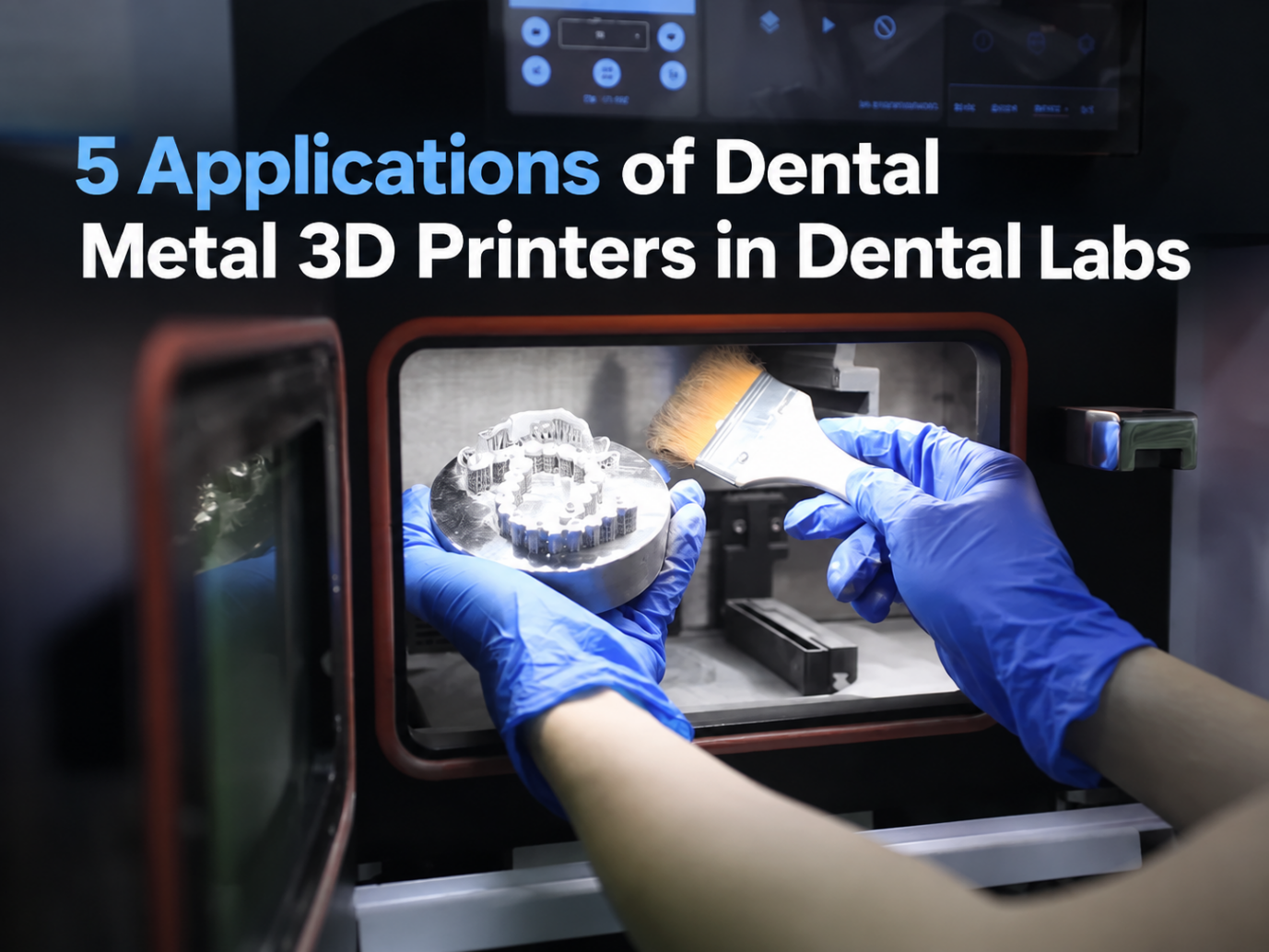
Riton also manufactures dental metal 3D printers optimized for these materials. The MLAB, MCUBE, M-150 Series, and M-200D printers use selective laser melting technology. These machines are designed for dental labs and clinics seeking high precision, repeatable results, and compatibility with multiple metal powders, including CoCr, titanium, and NiCr alloys.
Contact Riton now for a customized solution.
FAQs
1. What 3D printing technology is used for cobalt–chrome and titanium dentures?
Selective laser melting (SLM) is the mainstream 3D printing technology for both cobalt-chromium and titanium dental restorations. SLM uses a high-powered laser to melt metal powder layer by layer, fusing particles into a dense, solid structure.
2. What are the advantages of using cobalt chrome and titanium for 3D printing?
3D printing offers several advantages for both materials:
- High precision for better-fitting restorations.
- Only the powder needed for each part, reducing material waste.
- Multiple units can be printed simultaneously, increasing production efficiency.
- Complex geometries and thin walls are possible.
- Digital workflows ensure repeatable results across batches, eliminating variability.
3. Can one dental metal 3D printer print both cobalt‑chromium and titanium alloys?
Yes, some dental metal 3D printer systems can support both materials. For example, Riton metal 3D printers support titanium alloy and cobalt-chromium among other metal materials.
However, supporting both materials does not mean that identical printing parameters can be used. Each alloy requires appropriate powder specifications, laser settings, layer parameters, build strategies, and post-processing procedures.