Evaluating supplier quotations for an SLM system goes far beyond a basic price comparison. Dental laboratories often encounter wide cost gaps between units that seem technically identical on paper. This price discrepancy exists because the initial price tag accounts for a complex mix of variables—ranging from build volume and material compatibility to software ecosystems, production capacity, and necessary auxiliary gear—rather than just laser strength alone.
Consequently, when a laboratory assesses an slm metal 3d printer, the key question shifts from “Which option costs the least?” to “What actual manufacturing capability am I securing, and what will the total operational expenses look like?”
Why an SLM Price Quote Is Only the Starting Point
SLM, or Selective Laser Melting, uses a laser to selectively melt metal powder layer by layer. In dental manufacturing, this approach is used for metal restorations and frameworks. The equipment must therefore be evaluated as part of a production process rather than as an isolated machine.
Published market estimates vary substantially because metal systems serve different applications and configurations. Current industry sources place compact and industrial SLM equipment across a very broad price spectrum, making a universal “average price” unreliable.
That is why we recommend examining the quotation line by line. A lower machine price may correspond to a smaller build area, lower production capacity, fewer supported materials, or a different equipment configuration.
Machine Configuration Changes the Investment
Laser configuration is one of the clearest variables. A single-laser machine and a dual-laser production system are not equivalent investments because they are designed around different production requirements.
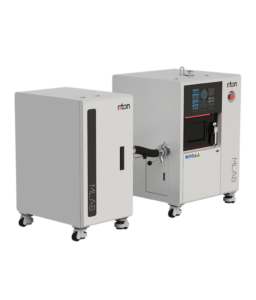
Build volume also matters. Our MLAB, for example, has a Φ100 × 90 mm melting area and uses a single 250 W fiber laser. The system supports CoCr and titanium alloys and is designed specifically around compact dental metal production.
Larger equipment can accommodate more parts within one build, but additional capacity may not create value for every laboratory. A small or mid-sized lab could end up paying for capacity that remains unused, while a high-volume operation may find a compact system restrictive.
Consequently, top metal 3d printing companies should be compared by configuration and intended workload, not by brand reputation alone. The meaningful comparison is what each quoted configuration actually delivers.
Production Capacity Changes the Cost Per Part
Machine price becomes easier to evaluate once production volume enters the calculation. Suppose two laboratories have identical equipment budgets. One produces a small number of frameworks each week, while the other fills builds continuously. Their economics will be very different.
Our MLAB’s published fastest-case productivity is 100 crowns or seven frameworks in 2.5 hours, although actual production time varies according to conditions.
Our M-150, meanwhile, has a Φ150 × 140 mm melting area and is specified to produce 200 metal crowns or 17 frameworks in 4.5 hours.
Those figures illustrate why capacity should be considered alongside purchase price. A higher-priced machine can potentially make more sense if its capacity matches a laboratory’s sustained workload. Conversely, a larger system may be economically inefficient if demand is too low.
The calculation should therefore include expected builds per month, parts per build, machine utilization, labor, and the useful production life of the equipment.
Materials and Operating Infrastructure Add to the Budget
Metal powder is another cost variable. Material prices differ by alloy, supplier, specification, and purchasing volume. At Riton, our dental material portfolio includes CoCr, titanium, and NiCr powders, while individual printer models specify their compatible material options.
Operating infrastructure also belongs in the budget. Our MLAB specifies nitrogen or argon as protective gases and requires an environment of 15°C–35°C, humidity of no more than 95%, and no vibration. Its published electrical requirement is 220 V.
A quotation that covers only the printer may therefore underestimate the complete project cost. Labs should establish whether gas supply, powder handling, installation, training, post-processing, and other required equipment are included or purchased separately.
SLM cost analysis should also account for support removal, cleaning, and finishing where the production workflow requires them. These activities consume labor and equipment time even though they do not appear in the printer’s headline price.
How Dental Labs Should Read an SLM Quotation
A useful quotation comparison starts with a standardized checklist. Record the laser configuration, melting area, supported materials, layer-thickness range, productivity, power requirements, machine dimensions, and environmental requirements for every candidate.
Next, separate capital cost from operating cost. Capital expenditure includes the printer and required auxiliary equipment. Operating expenditure can include powder, protective gas, maintenance, labor, electricity, and post-processing.
Software and workflow support deserve attention too. MLAB includes Riton Controller, which provides real-time machine status and printing-progress feedback. The system also supports remote transmission of printing data.
For top metal 3d printing companies, the ability to provide a complete production solution can therefore be commercially significant. Buyers should ask suppliers to identify exactly what is included, what is optional, and what will generate recurring expenses.
Price Makes Sense Only Against Production Needs
There is no single SLM price that represents the right investment for every dental laboratory. A compact machine can be appropriate when floor space and production volume are limited. A larger system becomes more relevant when the laboratory needs greater build capacity and sustained throughput.
Our MLAB occupies approximately 0.36 m² and has a listed machine weight of 150 kg, giving laboratories another variable to consider beyond purchase price: how easily the equipment fits the available production environment.
We suggest calculating the expected cost per finished restoration rather than focusing exclusively on acquisition cost. Include machine utilization, material consumption, labor, maintenance, infrastructure, and post-processing. That figure provides a more useful basis for an investment decision.
Ultimately, an slm metal 3D printer should be priced according to the production problem it solves. For dental labs, the most suitable quotation is not necessarily the lowest one. It is the proposal that provides appropriate capacity, compatible materials, manageable operating requirements, and a realistic path to profitable utilization.
That is the standard we apply when developing and positioning our systems: price should be understood in relation to the workflow, not separated from it. When laboratories compare top metal 3d printing companies, this broader view makes it easier to distinguish a genuinely suitable production investment from an attractive but incomplete price tag.