A dental resin does more than transform a digital design into a physical object. During printing, liquid material undergoes a chemical reaction that determines the structure, stability, and surface characteristics of the final part. For dental applications, this transformation is closely connected to biocompatibility.
The question behind material selection is not simply whether a resin can be printed accurately. Laboratories and manufacturers need to understand why a material interacts safely with biological environments and which scientific factors influence its final performance.
Biocompatibility in dental additive manufacturing is influenced by resin chemistry, polymerization behavior, post-processing, and the intended application. Each stage can influence the final properties of the printed component.
What Happens Inside UV Resin When It Becomes a Dental Part
UV resin begins as a liquid formulation containing light-sensitive components that react when exposed to a specific wavelength of light. During printing, energy from the light source triggers polymerization, converting the liquid resin into a solid structure.
The polymer network created during this reaction determines many characteristics of the printed part. The degree of conversion, cross-linking behavior, and final surface condition all influence how the material behaves after manufacturing.
Precise control over this chemical reaction is essential in dental applications. A printed piece is shaped not only by its exterior geometry but also by the internal microstructure formed during curing, where variations in polymer development can directly impact critical properties for dental use.
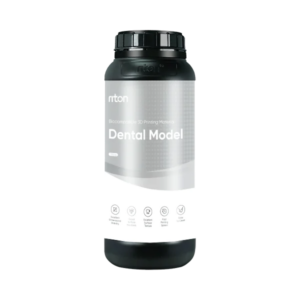
To meet the demands of digital dentistry, Riton engineers specialized resin materials tailored for a wide array of applications—including dental models, surgical guides, gingiva masks, splints, try-in products, denture bases, trays, crowns, and denture teeth. Our entire resin lineup is meticulously designed around the real-world requirements of dental manufacturing workflows.
Why Residual Components Matter in Dental Resin Safety
The chemical reaction inside resin does not end with printing alone. Remaining unreacted components may influence the characteristics of the final material, which is why curing and cleaning procedures are essential parts of dental resin processing.
Residual substances can affect how a material interacts with its surrounding environment. For dental manufacturers, controlling these variables helps create more predictable outcomes.
This is one reason resin formulation is a major area of research among dental 3D printing resin manufacturers. Material developers must consider how different chemical components contribute to printing performance while meeting the biological requirements of its intended dental application.
Scientific studies on dental photopolymer materials have examined how resin composition, polymer conversion, and post-processing influence biological responses. These findings demonstrate that biocompatibility depends on the complete material system rather than a single ingredient.
A properly developed resin requires balance. It must provide reliable printing behavior while supporting the requirements associated with its intended dental application.
How Printing Parameters Influence the Final Material Structure
The same resin formulation can produce different results if manufacturing conditions change. Printing parameters such as exposure settings, layer formation, cleaning procedures, and curing methods influence how completely the material develops its final structure.
For dental laboratories, this means material selection and workflow control cannot be separated. A suitable resin requires appropriate processing conditions to achieve consistent results.
A UV resin for 3d printing should therefore be evaluated within the complete manufacturing process. The printer, software settings, post-processing equipment, and operator procedures all contribute to the final condition of the printed component.
This relationship is particularly important in digital dentistry because laboratories increasingly depend on repeatable production systems. Consistency reduces uncertainty and allows technicians to maintain stable workflows across different cases.
Material manufacturers must provide clear guidance on processing requirements so users can achieve expected results. Without controlled production conditions, even advanced materials may not perform as intended.
Why Dental Resin Selection Requires Application-Based Evaluation
Dental applications are diverse, and each one creates different expectations for material performance. A resin designed for a diagnostic model does not necessarily require the same characteristics as a material intended for a component involving direct oral contact.
This difference means laboratories should evaluate materials according to their specific workflow. The correct question is not “Which resin is the best?” but “Which resin is appropriate for this application?”
Dental 3D printing resin manufacturers develop different material categories because digital dentistry involves multiple production scenarios. Model production, surgical planning, restorative workflows, and temporary dental solutions each have unique requirements.
Application-based evaluation also improves production efficiency. When technicians understand the purpose and limitations of each resin, they can select suitable printing parameters and reduce unnecessary adjustments.
The scientific approach to resin selection combines material knowledge with practical manufacturing experience.
How Material Engineering Supports More Reliable Digital Dentistry
Biocompatibility depends on controlled formulation, appropriate polymerization, and suitable post-processing, together with the requirements of the intended application.
Empowering digital dentistry, we at Riton deliver comprehensive equipment and material solutions tailored for diverse laboratory scenarios, backed by major regulatory milestones including NMPA and FDA approvals for select resin formulations.
The science of biocompatibility shows that dental resin performance is not determined at only one stage. It is built through every step, from molecular formulation to final processing. As digital dentistry develops, material engineering will continue to play a central role in creating predictable and responsible manufacturing solutions.