A powder bed fusion metal 3d printer turns digital 3D geometry into a physical metal component by selectively melting fine metal powder layer by layer. Unlike processes that remove material from a solid block, this technology creates the part progressively from powdered material.
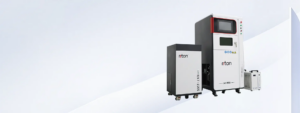
Understanding that sequence is more useful than simply knowing what the technology is called. For dental laboratories, the important questions are how the powder is deposited, how the laser creates each layer, how the layers become one component, and what must happen after printing.
What Exactly Is a Powder Bed Fusion Metal 3D Printer?
Powder bed fusion describes an additive manufacturing method in which a layer of metal powder is placed across a build area and selected regions are fused according to digital geometry.
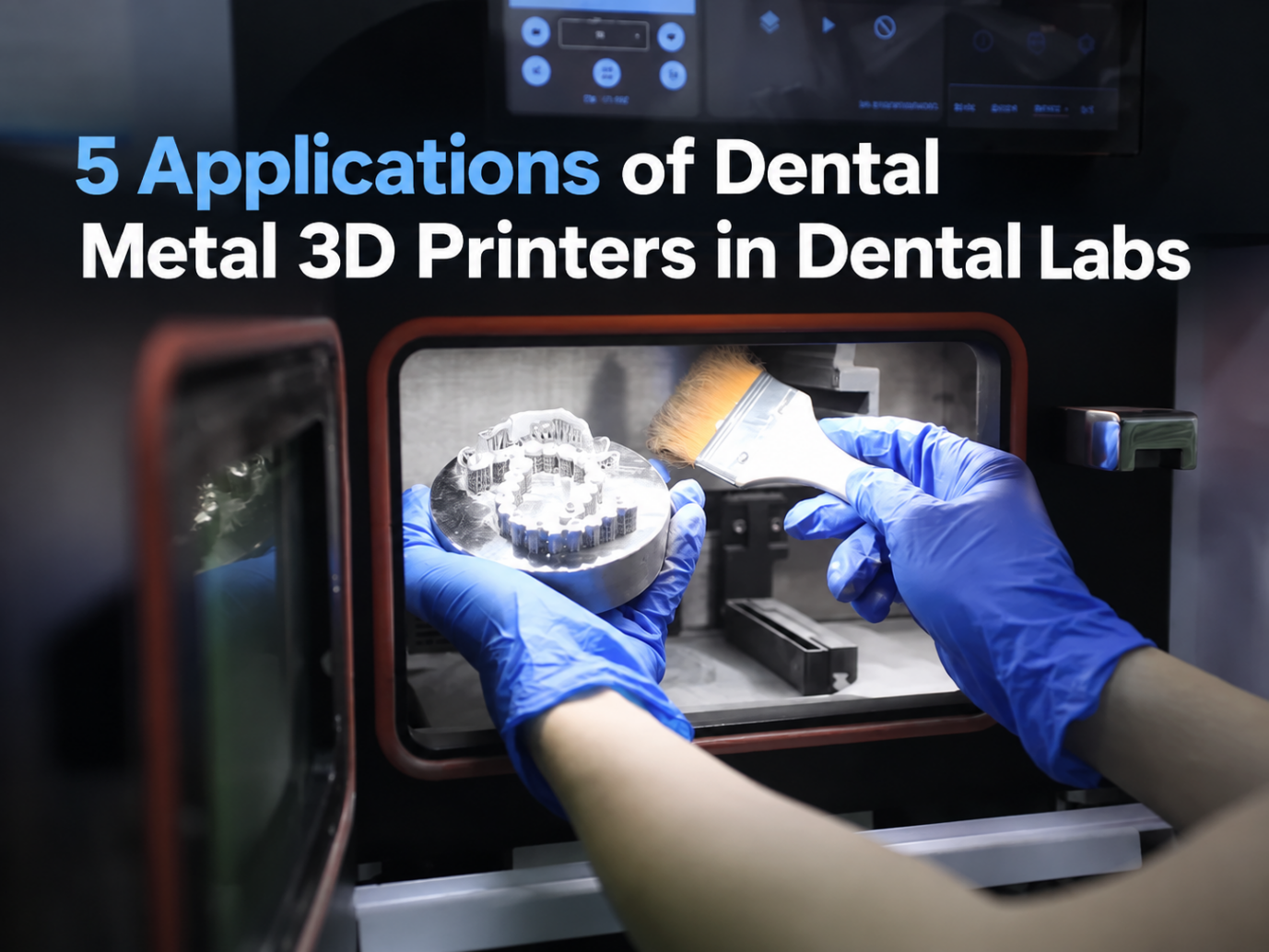
We at Riton use Selective Laser Melting (SLM), a metal additive manufacturing technique based on a high-energy laser that selectively melts metal powder. Our dental metal printers are designed specifically for producing dental metal restorations.
The distinction between the digital model and the physical material is fundamental. The printer does not simply reproduce a CAD file in one operation. Instead, software information controls where the laser acts during successive powder layers.
That makes the machine part of a larger digital manufacturing chain. The CAD design defines the intended geometry, while the printing process progressively creates the physical form.
How Does the Powder Become a Solid Dental Part?
Production begins with powder application. A thin layer of metal powder is distributed evenly across the build platform. We state that its metal 3D printing process typically uses a powder layer thickness of approximately 0.05 mm (50 μm), while the MLAB system specifies an adjustable layer thickness of 20–60 μm.
The laser then scans the selected areas defined by the digital model. Where the laser applies sufficient energy, the metal powder melts and subsequently solidifies into the required geometry.
A powder bed fusion metal 3D printer repeats this operation for successive layers. The build platform and powder-management system support the creation of the next layer, while the laser follows the corresponding cross-section of the digital component.
The process therefore converts three-dimensional geometry into a sequence of two-dimensional slices. Each slice represents material that needs to be formed at a particular height. Repeating those slices produces the complete object.
Why Does Layer-by-Layer Fusion Build a 3D Object?
One fused layer alone is only a thin section of the final component. Its significance comes from its connection to the layer beneath it.
After one region has been melted and solidified, the next powder layer is applied. The laser then forms the next cross-section while bonding it to the previously created material.
This repetition continues until the complete geometry has been built. The result is a solid metal component formed through the accumulation of individually processed layers.
At Riton, our MLAB illustrates this operating principle in a compact dental-focused system. Its listed specifications include a 100 × 90 mm melting area, 20–60 μm layer thickness, a 250 W single fiber laser, and nitrogen or argon as protective gas.
Those specifications describe the equipment used to control the process, but they do not change its fundamental logic: powder is deposited, selected regions are laser-melted, and successive layers create the component.
What Happens After the Laser Stops?
Printing does not necessarily mean that the dental component is ready for use. Once the build is complete, post-processing becomes part of the manufacturing sequence.
We at Riton identify cleaning, support removal, heat treatment, and surface finishing among the post-processing operations used after metal printing.
Support structures can be required during manufacturing to stabilize certain geometries. Their removal therefore becomes a physical finishing task rather than a software-only operation.
Heat treatment may also be used to modify the condition of the printed component according to the applicable production process. Surface finishing can then address the requirements of the intended dental application.
Consequently, the manufacturing cycle should be viewed as more than laser exposure. A finished component emerges only after the printed build has passed through the appropriate downstream operations.
How Does This Process Translate Into Dental Production?
Dental manufacturing is particularly dependent on digital geometry because restorations and frameworks are designed around individualized shapes. Metal additive manufacturing provides a direct route from that digital design environment to physical production.
At Riton, our dental metal printer range is designed for applications including crowns, bridges, implants, dentures, and orthodontic frameworks. Our company lists CoCr and titanium among the materials used with its metal printer systems.
The production strategy can also vary according to the equipment. For example, our M-150 has a 150 × 140 mm melting area including the build plate, while its published specifications list CoCr alloy and titanium alloy as melting materials.
For a dental laboratory, the practical significance is the connection between digital design and batch manufacturing. Multiple components can be arranged within a build according to the production requirements and available build space.
What Does the Technology Require to Work Reliably?
Metal powder and laser processing require controlled operating conditions. Protective gas is used during the printing process, with Riton specifying nitrogen or argon for its metal printer systems.
Powder management also matters. Fine metal powder requires appropriate handling and cleaning procedures. At Riton, our documentation notes that metal powder used in printing can be flammable and explosive during cleaning, highlighting why powder-management procedures should be treated as part of the equipment workflow rather than an afterthought.
Installation requirements extend beyond the printer itself. We at Riton identify site conditions, temperature and humidity, electrical supply, gas supply, and other infrastructure requirements as factors that must be addressed during installation.
These requirements explain why adopting metal additive manufacturing involves more than purchasing a machine. The surrounding production environment must support the process.
What Should Buyers Understand About the Technology?
The simplest way to understand powder bed fusion metal 3D printer technology is to follow the material through the machine.
First, metal powder is spread into a controlled layer. Next, a laser selectively melts the areas defined by the digital model. The fused material solidifies, another powder layer is applied, and the sequence repeats. Once the build is complete, the component undergoes the required post-processing.
That sequence is the foundation of SLM metal additive manufacturing. For dental laboratories evaluating the technology, understanding each stage provides a better basis for assessing equipment, materials, workflow requirements, and downstream processing.
We at Riton focus our metal 3D printing solutions on dental production, where digital designs must be converted into repeatable physical components. The technology is not simply about placing metal powder under a laser. It is a coordinated manufacturing process connecting digital geometry, controlled material deposition, laser melting, layer formation, and finishing.
As one of the top metal 3d printing companies serving dental manufacturing, we believe buyers should evaluate the entire process rather than judge a printer by a single specification. That approach makes it easier to understand what the equipment actually does, what supporting infrastructure it requires, and where it fits within a modern dental laboratory.