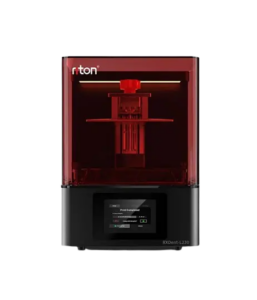
Dental clinics are increasingly bringing digital manufacturing closer to the point of care. As we evaluate whether to invest in a high-end resin 3D printer, the key question is not simply whether the machine costs more than an entry-level alternative. We need to determine whether its precision, production capacity, workflow integration, and usability can create measurable value for our clinic. Riton’s RXDent-L230 provides a useful example of how advanced resin printing can support demanding dental production.
What Makes a Dental Resin 3D Printer “High-End”?
We should evaluate a dental resin 3D printer according to the requirements of our actual workflow rather than relying on marketing labels. Resolution, pixel size, molding area, printing speed, software, material compatibility, and post-processing requirements all influence the practical value of the system.
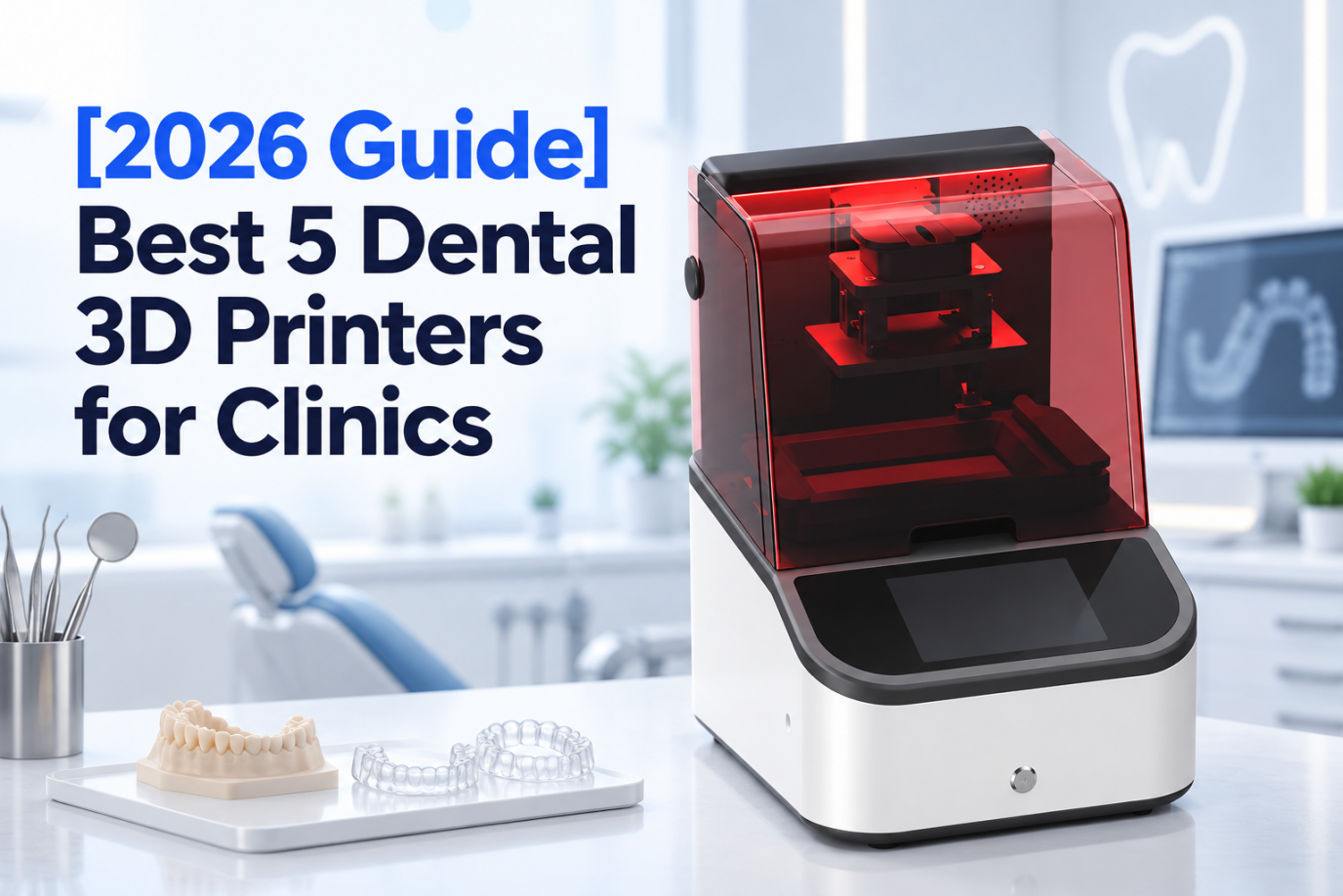
Riton’s resin printers use UV curing technology, which works by selectively curing liquid photosensitive resin layer by layer. This approach is suitable for producing detailed dental components and models. Riton’s resin material portfolio covers dental models, surgical guides, gingiva masks, splints, try-ins, denture bases, trays, crown bridges, crowns, and denture teeth.
Precision Matters for Digital Dental Workflows
For dental clinics, dimensional accuracy is directly connected to the usefulness of printed parts. When we produce models, guides, or other dental components, fine details need to be reproduced consistently. A printer with a high-resolution imaging system can therefore provide a stronger foundation for detailed digital workflows.
Production Capacity Can Change the Investment Equation
A premium printer becomes easier to justify when it helps us process more cases without proportionally increasing labor or equipment requirements. Clinics should therefore examine how many parts can be produced within a normal working period and whether the molding area supports batch production.
The RXDent-L230 is designed with a large molding area and high-speed printing in mind. Its 228 × 128 × 150 mm molding size allows multiple dental models or components to be arranged within one production cycle, depending on their dimensions and orientation. For clinics with growing digital workloads, this capacity can be more valuable than simply choosing the lowest initial equipment price.
8K Resolution and Anti-Aliasing Support Surface Quality
Image quality is another reason we should look carefully at higher-end systems. The RXDent-L230 incorporates an 8K HD monochrome screen and 8× anti-aliasing. These features are designed to support detailed layer formation and smoother printed surfaces, which can be important when producing dental models and other components with fine anatomical features.
For us, however, screen specifications should not be considered independently. The final result depends on the complete printing process, including resin selection, model preparation, printer parameters, support structures, cleaning, and UV curing. Riton’s workflow includes cleaning printed parts with isopropyl alcohol, UV curing, support removal, and surface finishing where necessary.
Material Selection Determines Practical Value
A high-end printer is as useful as the materials available for its intended applications. We should confirm that the supplier offers dental-specific resins appropriate to our production requirements and that the materials have relevant documentation or certifications.
Riton develops dental-specific UV-curing resins for multiple applications. For example, its Model V1.0 is designed for dental models and offers dimensional stability, surface hardness, and detailed reproduction. Its Model F1.0 is developed for flexible denture bases, while Model HS1.0 is intended for occlusal splints and bruxism pads. This application-oriented portfolio can make one printer platform more versatile for different workflows.
Software and Workflow Efficiency Also Matter
We should not overlook the operational side of the investment. A printer may deliver excellent output but still create bottlenecks if operators find it difficult to prepare jobs, manage materials, or complete post-processing efficiently.
Our resin printers are designed specifically for dental applications, with an emphasis on high-speed printing, precision, and surface quality. The RXDent-L230 also combines its large molding area with intelligent software and a compact, lightweight design. For clinics, these workflow considerations can influence how easily advanced printing becomes part of everyday production.
When Does a High-End Resin 3D Printer Pay Off?
We should compare the investment against our production goals rather than against the purchase price alone. Clinics handling increasing digital case volumes, requiring detailed models, or seeking to bring more production in-house may gain more from advanced equipment than clinics with occasional printing needs.
Riton has provided an integrated ecosystem of resin and metal printers, dental materials, automatic wire-bending equipment, and proprietary digital platforms. This broader capability allows us to consider equipment as part of a scalable digital workflow rather than as an isolated purchase.
Making the Case for Advanced Resin Printing
A high-end resin 3D printer is worth considering when precision, production capacity, material versatility, and workflow efficiency can directly support our clinic’s business objectives. The RXDent-L230 combines an 8K monochrome screen, 8× anti-aliasing, 30 μm pixel size, and a 228 × 128 × 150 mm molding size, giving dental businesses a strong platform for expanding digital production.
At Riton, we believe the strongest investment is one that grows with the workflow. By combining dental-specific resin 3D printers with application-focused materials and digital solutions, we help clinics move beyond occasional prototyping toward more systematic digital production. Before purchasing, we recommend evaluating actual case volume, applications, material requirements, and workflow goals together to determine whether advanced resin printing can deliver sustainable operational value.