Are metal 3D printers worth it? For a dental laboratory, the answer depends less on the novelty of metal additive manufacturing and more on how well the equipment fits daily production. A printer can become a valuable manufacturing asset when a laboratory has consistent demand, a suitable digital workflow, and enough production volume to use the system effectively.
We approach this question from the manufacturing side. Rather than asking laboratories to judge a machine by its purchase price alone, we recommend looking at what the equipment changes across the complete production process.
When Does Metal 3D Printing Make Financial Sense?
A metal printer starts to make stronger commercial sense when digital design already plays a central role in production. If restorations are being designed digitally, bringing metal manufacturing into the same workflow can reduce dependence on external production and give the laboratory greater control over scheduling.
Production volume is another decisive factor. A system that operates regularly can spread its investment across more manufactured units. A machine purchased for occasional jobs faces a different economic calculation. We therefore suggest comparing expected monthly demand with actual machine capacity before making a capital decision.
Application mix matters as well. Dental laboratories may have different requirements for crowns, frameworks, bars, or other metal components. The right machine should reflect the parts being produced rather than simply the largest specification available.
Our metal 3D printing solutions are designed around dental production requirements, with systems ranging from compact equipment to larger production-oriented machines. MLAB, for example, has a melting area of 100 × 90 mm and is designed around a compact footprint of approximately 0.36 m².
The Real Investment Is Bigger Than the Printer
The purchase price tells only part of the story. Metal additive manufacturing also involves powder handling, protective gas, installation conditions, post-processing, operator training, and ongoing technical support. Ignoring these elements can produce an unrealistic return-on-investment calculation.
Infrastructure should be considered before an order is placed. Different systems have defined requirements for power, working environment, gas supply, and physical space. For example, the M-200D requires a 4KW 220V power supply and operates with nitrogen or argon as protective gas.
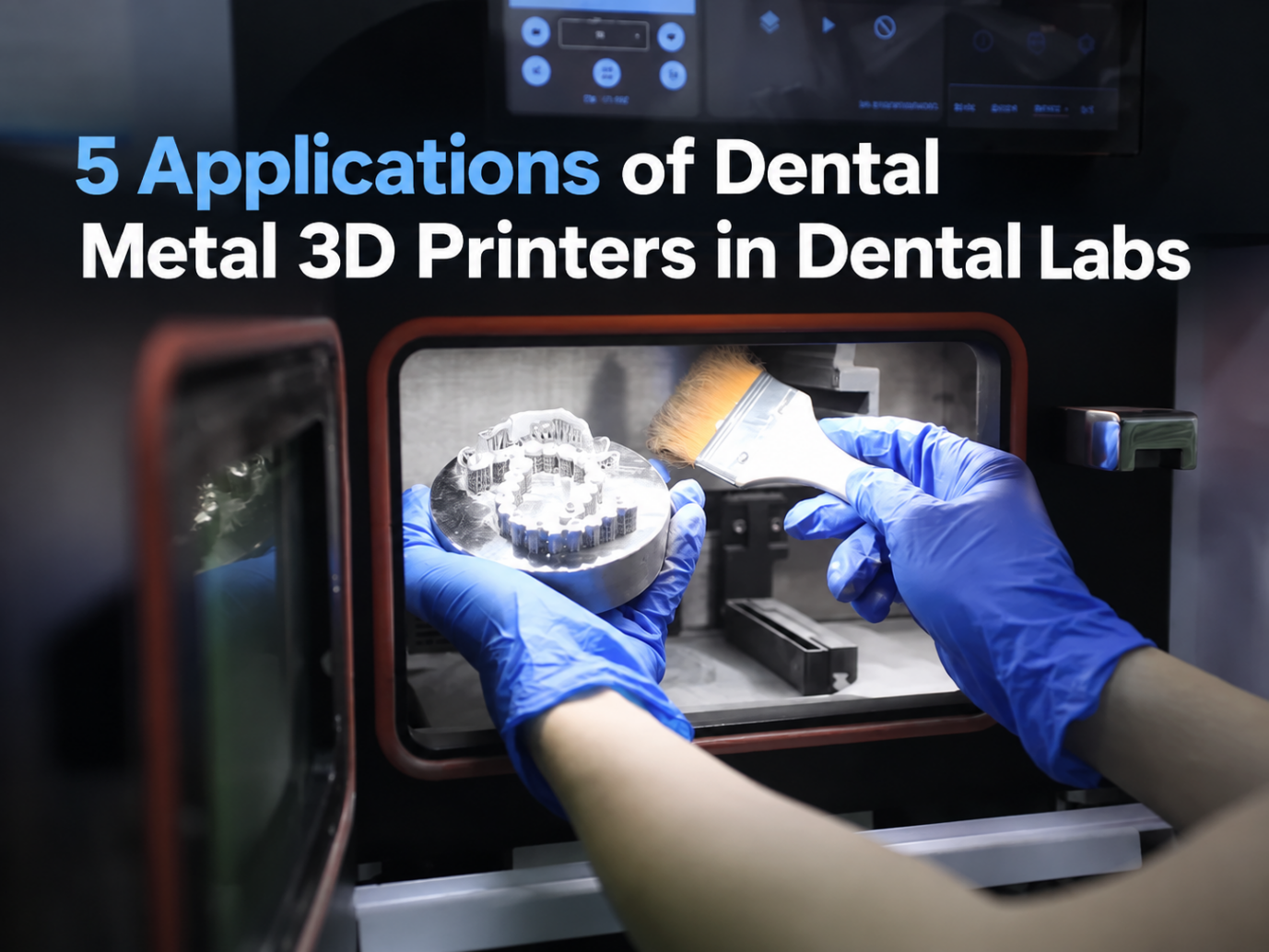
Post-processing also belongs in the workflow calculation. Depending on the production setup, printed parts can require powder removal, support removal, heat treatment, or surface finishing. These steps consume equipment capacity and labor, so they should be included when estimating the cost of a finished component.
We also recommend considering auxiliary equipment as part of the production system rather than treating the printer as an isolated purchase. Our portfolio includes equipment for processes such as heat treatment, nitrogen generation, and powder separation.
How We Think About Choosing a Metal 3D Printing Company
A search for top metal 3d printing companies can provide a useful starting point, but rankings alone cannot determine whether a supplier is appropriate for a dental laboratory. We believe buyers should examine documented specifications, intended applications, material options, production capacity, and technical support.
Product documentation should answer practical questions. What is the build area? Which materials are supported? What protective gas is required? What production capacity does the manufacturer publish? How large is the equipment, and what site conditions are specified?
Our M-150 Series, for example, is designed for dental metal restoration production and has a melting area of Φ150 × 140 mm, including the build plate. The current product page also states a production efficiency of 200 crowns or 17 frameworks in 4.5 hours. Actual production conditions should still be evaluated against each laboratory’s nesting strategy and workflow.
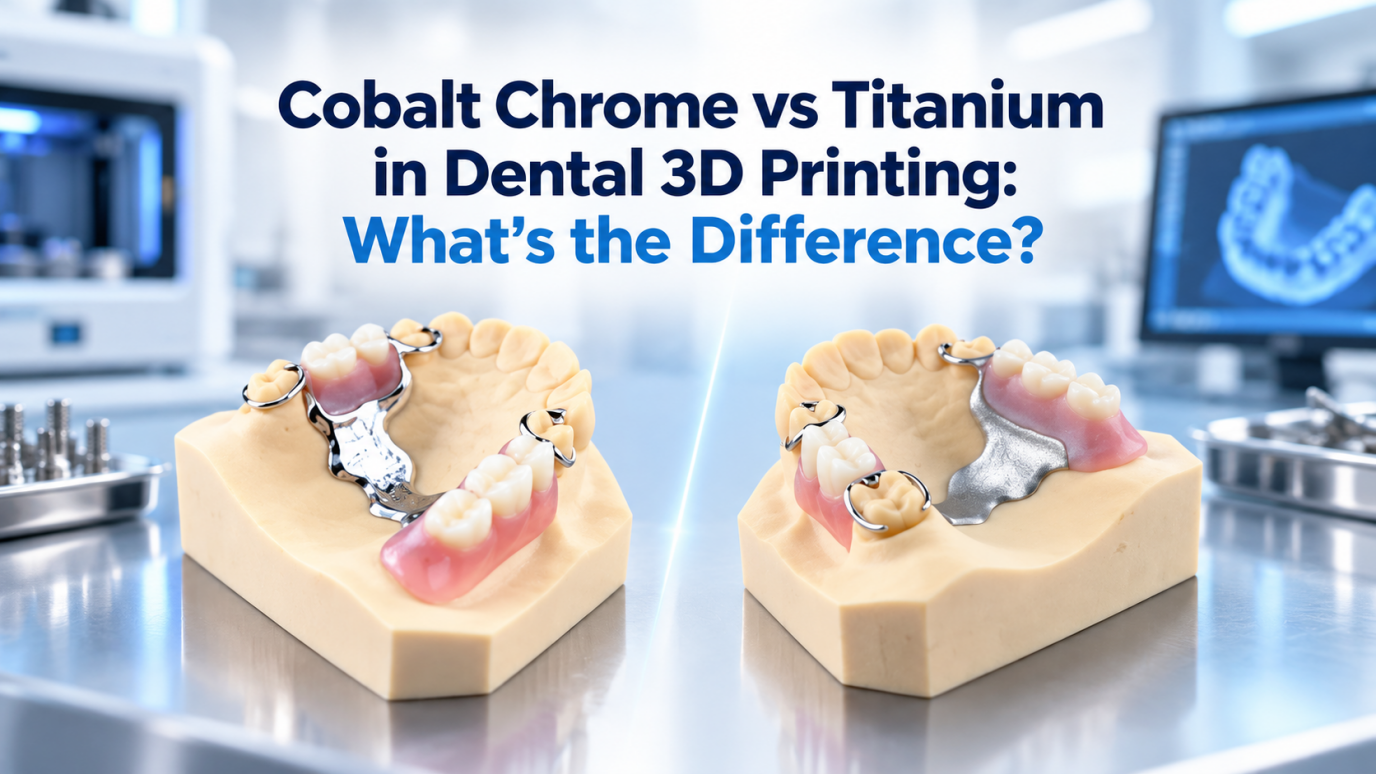
Material compatibility deserves equally careful attention. Our current metal printer portfolio identifies CoCr and titanium among the supported materials, while our wider material portfolio also includes NiCr. Buyers should confirm the exact material configuration for the specific machine they are evaluating rather than assuming that every material applies to every model.
What We Would Check Before Buying
Anyone searching for a 3d metal printer for sale should first define the parts that the laboratory actually intends to manufacture. Starting with the application makes it easier to determine the required build volume, production capacity, material configuration, and supporting infrastructure.
Machine size is particularly important. A compact system can be attractive where floor space is limited, while a larger build platform can become more valuable as batch production increases. The M-200D, for instance, provides a 220 × 150 × 140 mm melting area and uses dual fiber lasers. Its published production figure is up to 430 crowns or 35 partial frames in 5.5 hours under the stated conditions.
Software and operator experience should also enter the evaluation. Production equipment is only useful when operators can manage the workflow consistently. Our MLAB includes Riton Controller software with real-time status and progress feedback, while the M-200D includes live monitoring and flaw-detection functions.
Support is another area worth investigating before signing a purchase agreement. Ask what training is available, how technical issues are handled, and whether assistance extends beyond initial installation. These details can influence how quickly a new system becomes part of normal production.
Match the Machine to the Production Model
The most expensive machine is not automatically the best investment. A laboratory should choose capacity that corresponds to its current workload and realistic growth plans.
Smaller operations may value compact equipment and flexible installation. Higher-volume laboratories may prioritize build area, batch capacity, and production efficiency. The decision becomes clearer when the laboratory maps its typical orders against the machine’s actual build dimensions and published production figures.
We see the investment question differently from a simple equipment comparison. Metal 3D printing becomes worthwhile when the printer is sufficiently utilized, the workflow is prepared for in-house production, and the complete manufacturing cost makes commercial sense.
For laboratories evaluating Riton, we recommend starting with production requirements rather than a preferred machine model. Define the parts, materials, expected volume, available space, and supporting processes first. Then compare equipment against those requirements. That approach produces a more defensible investment decision and reduces the risk of buying capacity that the laboratory cannot effectively use.