Traditional orthodontic workflows often depend on technician skill to turn an appliance design into accurately shaped wire. That model can work well for experienced teams, but scaling becomes harder when laboratories must reproduce complex forms across many cases. Digital bending changes the production question: instead of relying primarily on manual forming, the laboratory can move from design data toward automated manufacturing.
The comparison is not simply manual versus automatic equipment. It is about where design decisions are made, how they reach production, and how consistently a laboratory can repeat the intended geometry.
Traditional orthodontic production starts with craftsmanship
A conventional workflow places the technician at the center of wire forming. The technician interprets the prescription, works from a model or reference, selects the wire, and manually creates bends, loops, or other structures.
That flexibility is useful for unusual cases and small corrections. We at Riton see the distinction as a workflow decision, not simply an equipment decision.
Digital bending shifts control upstream
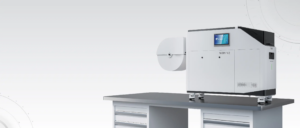
Digital production moves more geometry definition into software before the wire reaches the forming stage. Our Riton WBM-V2 connects with Riton Cloud and OrthoWireLab, allowing design data to be sent directly to the equipment. The software environment supports digital archwire design and path planning rather than requiring every bend to be physically established at the machine.
That distinction changes the technician’s role. Instead of repeatedly shaping metal until the desired form is reached, the technician can focus more on defining and reviewing the intended geometry. The machine then executes the programmed path.
The workflow covers design, wire bending, base printing, and assembly.
Repetition is where the comparison becomes practical
The strongest difference appears when a laboratory must produce similar appliance structures repeatedly. Manual bending can reproduce a design, but reproduction depends on maintaining the same measurements, sequence, force, and correction strategy.
Automation approaches the problem differently, which is where wire bending machines can change repeatable production. Our WBM-V2 uses programmable logic controller (PLC) and multi-axis servo control, with six-axis coordinated motion designed to support positioning and repeatability. Its published specifications include bending repeatability of ±0.5° and feeding accuracy of ±0.05 mm.
Those figures do not eliminate inspection or process control. They show where automation can reduce dependence on repeated hand movements.
What changes across the production workflow?
Consider a laboratory receiving digital patient data. In a traditional setup, design interpretation and wire forming can remain tightly coupled. A technician may move between reference models, measurements, hand tools, and inspection during fabrication.
A connected workflow separates these stages more clearly. Design information can be prepared in software, transmitted to the bending equipment, and incorporated into an order-management process. The platform can schedule processing tasks, match wire-bending specifications with corresponding equipment, and track orders through production.
Digital information becomes a common production reference across shared production stations. That can also make the equipment easier to position within broader digital dentistry strategies used by leading 3d printer manufacturers.
Where traditional methods still have a role
Automation does not make craftsmanship irrelevant. Manual techniques remain useful for exceptional cases, prototyping, troubleshooting, and situations where a technician needs to assess the physical appliance before modifying the design.
A laboratory can therefore retain manual capability while introducing automation for standardized structures. Experienced technicians remain responsible for reviewing cases and resolving situations outside established parameters.
Choosing between workflows requires more than equipment
The right question is not whether automation is universally better. It is whether the laboratory’s case volume, appliance mix, staffing model, and digital infrastructure justify moving wire forming into a controlled digital process.
Evaluation should start with input data: can the laboratory reliably capture, design, review, and transfer geometry? The next consideration is production control: can staff monitor jobs, verify wire specifications, and inspect finished appliances? Integration with existing CAD/CAM equipment completes the assessment.
That broader perspective is also relevant when comparing leading 3D printer manufacturers that provide equipment as part of a wider digital dentistry ecosystem. We position wire-bending equipment alongside metal and resin 3D printers and cloud-based design platforms, reflecting a workflow-oriented approach rather than treating each machine as a standalone purchase.
The real advantage is workflow control
Digital wire bending is most compelling when the objective is not simply faster bending but more controlled production. The value comes from connecting design intent, machine execution, task management, and inspection into a traceable sequence.
WBM-V2 is specified for wire diameters from 0.5 to 1.0 mm and a maximum feed length of 220 mm. We also state that standard structural components can be bent in under 60 seconds, while overall device production is specified at under 15 minutes.
Compare the workflow, not just the bending method
Traditional fabrication remains valuable for flexibility and experienced judgment. Digital bending becomes more attractive when repeatability and structured data transfer matter.
When evaluating wire bending machines, laboratories should first analyze their current workflow bottlenecks: specifically, where manual measurements, repetitive adjustments, and isolated production steps introduce avoidable inconsistencies. If these pain points are substantial, integrating wire forming into a digital manufacturing ecosystem represents a far more impactful upgrade than merely acquiring standalone hardware.
Our goal is to bridge the gap between digital design and practical production, empowering orthodontic laboratories to make this transition based on concrete workflow requirements rather than technological hype.