The quality of a denture is influenced long before a patient receives the final restoration. During digital manufacturing, the resin material selected by a dental laboratory determines how accurately a design can be transformed into a finished component.
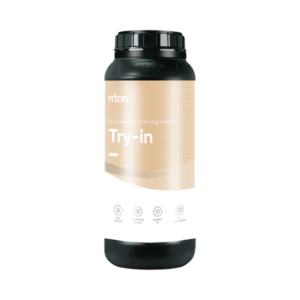
High-quality denture resins are developed to perform specific functions within this process. They are not simply printing materials. Their purpose is to support accurate fabrication, predictable production, and the requirements of modern dental workflows.
As digital dentistry expands, laboratories are paying closer attention to how materials interact with design software, printing systems, and post-processing procedures. At Riton, we develop dental materials with the goal of helping laboratories achieve more consistent results in digital manufacturing environments.
The Role of Denture Resin Begins Before the Denture Is Printed
A denture resin influences the production process from the moment a laboratory prepares a digital case. The selected material affects how the digital design can be reproduced and how the final component behaves after manufacturing.
In traditional denture production, technicians often depend heavily on manual adjustment. Digital workflows reduce some manual variation, but material performance remains a critical factor.
The resin must match the intended application. A material designed for denture production needs to support the structural requirements of the restoration while remaining suitable for the laboratory’s printing and curing workflow.
For this reason, resin selection is not only a consumable decision. It is part of the production strategy. The right material helps laboratories maintain a controlled process from digital design preparation to final finishing.
How Resin Materials Translate Digital Designs Into Denture Structures
One of the main purposes of denture resin is converting digital information into a physical dental component. A CAD-designed denture base contains detailed shape information that must be reproduced accurately during printing.
The resin acts as the medium that carries this digital design into reality. If the material does not perform consistently, the printed result may require additional adjustments during finishing.
Modern dental laboratories use digital workflows that combine scanning, design software, and additive manufacturing. Within these systems, the role of a specialized dental resin is to support accurate production while fitting into established manufacturing procedures.
At Riton, we develop resin solutions for dental applications, including materials designed for digital denture workflows. We formulate these materials to support different stages of dental production, with specific material characteristics suited to each application.
The relationship between design data and material performance is therefore essential. A successful digital denture workflow depends on both accurate design and suitable resin behavior.
Why Material Behavior Determines Denture Manufacturing Results
A denture resin must perform consistently throughout printing, cleaning, curing, and finishing. Each stage can influence the final quality of the manufactured component.
Dimensional stability is one important function of resin materials. Dental laboratories rely on materials that can maintain the designed geometry during production because accuracy affects the fitting and finishing process.
Surface characteristics also influence technician workflows. A resin that supports efficient finishing procedures can reduce unnecessary adjustments and help laboratories maintain consistent production methods.
Mechanical properties are another important factor. Dentures must function under repeated daily conditions, so the material used in production needs to support the requirements of the intended application.
The role of high-quality materials is not limited to producing a visible shape. They help create a more predictable manufacturing environment where technicians can follow repeatable procedures.
A professional dental resin manufacturer focuses on balancing these material requirements with the practical needs of dental laboratories. Material development must consider not only formulation but also how the resin performs inside real production workflows.
Where High-Quality Denture Resins Create Value in Dental Production
Laboratory operations provide the context in which the purpose of quality resin becomes clearer. Dental labs need materials that support efficient production without creating unnecessary workflow interruptions.
A reliable resin helps laboratories establish standardized manufacturing processes. This is especially important for facilities handling multiple cases where consistency across different production runs directly affects operational efficiency.
High-quality denture resins also support communication between digital design and manufacturing teams. When material performance is predictable, technicians can better manage expectations during production planning.
For laboratories adopting digital manufacturing, choosing appropriate resin materials can influence how effectively they use their equipment and software systems. Material selection becomes part of optimizing the complete workflow rather than an isolated technical choice.
At Riton, we understand that dental materials must serve practical manufacturing purposes. Our focus is supporting laboratories that require dependable materials for modern digital dental production.
Why Material Selection Has Become a Core Part of Digital Dentistry
The development of digital dentistry has changed how laboratories evaluate production materials. Equipment and software are important, but the resin used during manufacturing remains a fundamental part of the final outcome.
High-quality denture resins provide the functions needed to connect digital design with physical restoration production. They support accuracy, workflow control, and consistent manufacturing practices.
To enhance production planning, dental laboratories must look beyond the basic supply mindset and recognize resin as a critical driver of their manufacturing system.
Driven by the growing adoption of digital workflows, the demand for specialized dental materials will steadily rise. In the end, when labs invest in the right resin, they can achieve confident denture manufacturing and long-term production stability.