Finding a reliable 3D metal printer company in 2026 should not begin with a popularity list. For a dental laboratory, reliability has a practical meaning: can the supplier show what its machine can produce, explain the process conditions, and match the equipment to the workload? A supplier search can build a shortlist, but the final choice requires evidence.
What Should a Reliable Supplier Prove Before You Shortlist It?
Reliability is not one specification. It combines machine design, documented capabilities, application fit, and the supplier’s ability to explain how the system will operate in your environment.
Start with the product page. Does it provide measurable information about laser power, build area, layer thickness, protective gas, materials, power requirements, dimensions, and production capacity? Detailed specifications make supplier comparisons more objective.
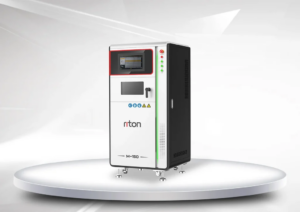
Our M-150 page identifies a single fiber laser with output of up to 500 W, a 150 × 140 mm melting area including the build plate, 20–60 μm layer thickness, and nitrogen or argon protective gas. It lists CoCr and Ti alloys as melting materials.
Can the Machine Handle Your Workload Without Becoming the Wrong Size?
A dependable supplier should not be judged by whether it offers the largest printer. The question is whether the equipment matches production volume, floor space, and the types of dental parts being produced.
The M-150 has a listed footprint of about 0.8 m², with dimensions of 780 × 950 × 1,660 mm and a weight of 500 kg. Installation belongs in the initial assessment.
Production capacity deserves equal scrutiny. We state that the M-150 can print 200 metal crowns or 17 frameworks in 4.5 hours. Such figures should be compared with your own case mix, nesting strategy, operating schedule, and downstream capacity.
A compact small metal 3d printer can make sense when space or demand is limited. Higher capacity becomes more relevant when recurring workloads can keep the build area productive.
Which Specifications Reveal More Than a Marketing Claim?
Numbers become more useful when the manufacturer explains the technologies behind them. The M-150 lists a scanning speed of up to 14,000 mm/s and describes an adjustable optical path, spot compensation, multi-pass contour outlining, island scanning, regional filling, and composite support structures.
These details give buyers specific questions to ask: Which parameters are adjustable? Which materials have established process settings? How is the system configured for different dental geometries?
Gas management also deserves attention. The M-150 uses automated deoxidation logic and a dual gas supply system, which the manufacturer says reduces gas consumption and avoids waiting for gas refilling.
A serious shortlist should therefore include suppliers that can explain process architecture, not just advertise laser power.
Can the Supplier Demonstrate Genuine Dental Production Experience?
General industrial metal-printing experience does not necessarily make a supplier suitable for dental manufacturing. The documented applications should correspond to the work being considered.
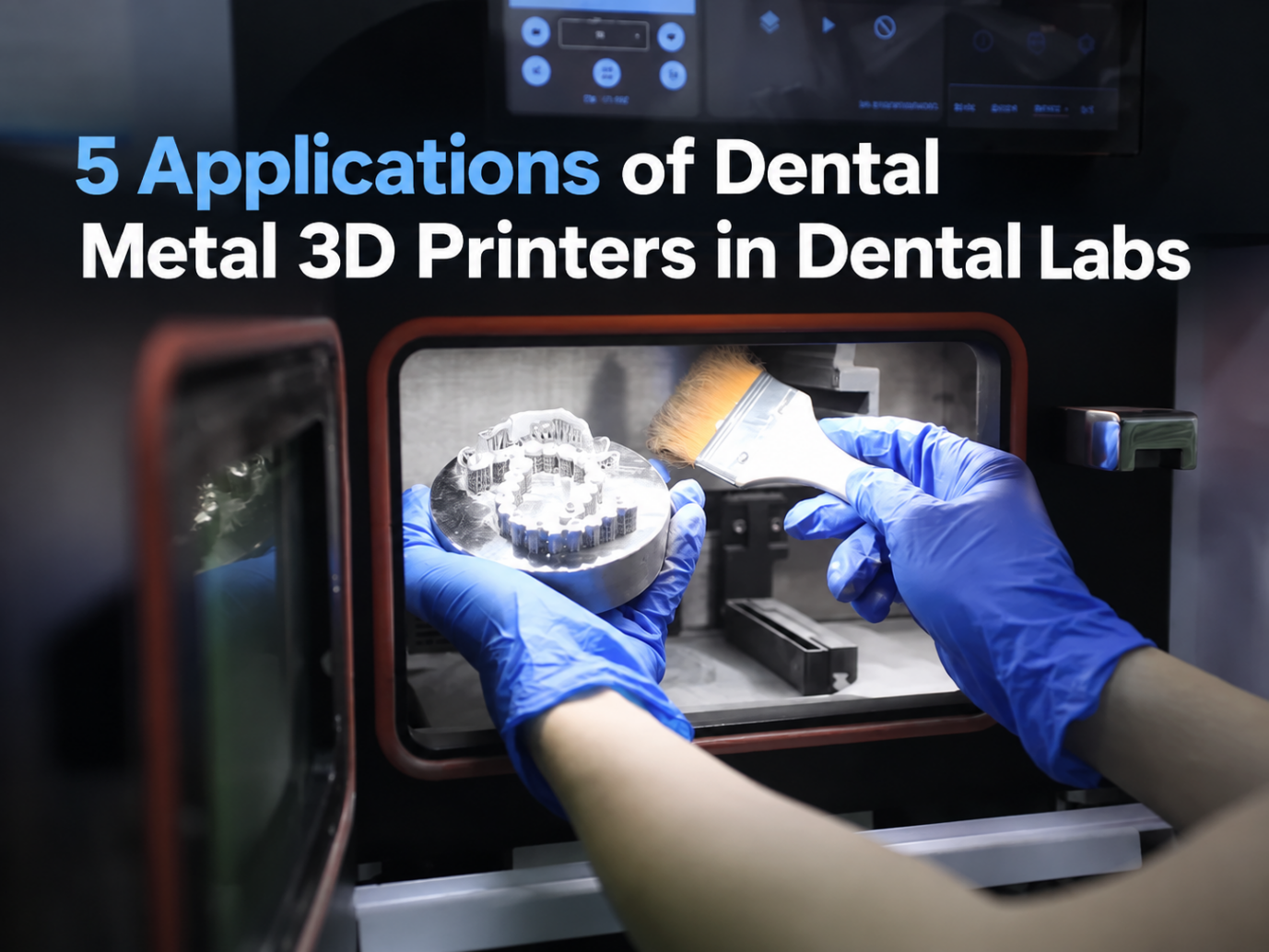
The M-150 page shows CoCr examples including lingual appliances, crowns, frameworks, implant crowns and bridges, and dental bridges. It also shows titanium framework examples.
Material information should also be checked. The M-150 is specified for CoCr and Ti alloys, while the page also states compatibility with various metal powders, including stainless steel.
A dental laboratory should ask which material, process parameters, and machine configuration apply to its intended production rather than assuming that every listed material suits every application.
Do the Available Configurations Match Your Future Production Plan?
Supplier reliability can also be assessed by how clearly the manufacturer explains its platform configurations. For our M-150, available options include Dual Laser Service, Ti Service, Powder Changer, and Hybrid Milling, allowing users to adapt the system to different production needs.
For example, the Dual Laser Service uses two fiber lasers, while the Powder Changer provides two powder-printing modes with independent circulation pipes. Hybrid Milling combines additive and subtractive manufacturing and is designed for the mass production of precision workpieces.
These configurations illustrate how the same platform can support different production strategies. For laboratories considering a small metal 3D printer, such flexibility can be particularly valuable when space is limited but production requirements may expand over time. Ultimately, the right configuration should be selected based on the expected workload, available space, and process requirements.
What Should You Verify Before Signing the Quotation?
Before choosing among 3d metal printer companies, request the exact machine configuration and confirm the assumptions behind production figures. Review material compatibility, facility requirements, installation conditions, software, consumables, maintenance, training, and service arrangements.
The M-150 specifies a 3 kW, 220 V power supply and an operating environment of 15–35°C, humidity of no more than 95%, and no vibration. Check those conditions against the proposed site.
We recommend comparing quotations on equivalent configurations. A lower price is difficult to interpret when one quotation includes options or services that another excludes.
Our approach at Riton is to start the evaluation with measurable equipment information. At Riton, we use the M-150’s technical specifications, dental production samples, configuration choices, and stated operating conditions as the basis for technical discussions.
How Should a Laboratory Make the Final Decision?
Finding a trustworthy supplier in 2026 does not require a manufacturer ranking. Use a repeatable process: verify specifications, match capacity to workload, examine dental application evidence, understand configuration options, and confirm installation requirements.
At Riton, we provide technical documentation for the M-150 that gives buyers concrete information to evaluate. Due diligence is still necessary, but documented specifications can make the process more practical.
Search visibility alone doesn’t tell you which 3D metal printer companies are worth working with. What matters more is clear documentation, a machine that actually fits the lab’s needs, and a supplier who can answer technical questions before installation and production.