Metal 3D printing gives dental laboratories greater flexibility in producing complex, customized components. The printed part, however, still needs to go through several finishing and post-processing steps before it is ready for its intended use. The condition of a printed metal part after manufacturing still determines how smoothly it can move toward final application.
This is why polishing equipment has become an important part of digital dental workflows. Modern systems are designed to address the finishing challenges created by additive manufacturing and provide laboratories with a more controlled post-processing method.
A professional 3d print polishing machine is no longer viewed as a simple finishing tool. It has become part of a broader production strategy for laboratories that want greater consistency after metal printing.
At Riton, we focus on developing dental manufacturing solutions that support the complete production journey, including metal printing and post-processing requirements.
Modern 3D Print Polishing Machines Solve the Last-Mile Problem of Metal Additive Manufacturing
The final quality of a 3D printed dental component depends on more than the printing process itself. After fabrication, laboratories often need to improve surface conditions before moving parts into further processing stages.
Traditional manual polishing can achieve effective results, but it often depends heavily on technician experience. As production requirements increase, laboratories need methods that are easier to standardize and manage.
Modern polishing equipment addresses this “last-mile” challenge by creating a dedicated stage between printing and final preparation.
For dental manufacturers using metal additive manufacturing, this stage has become increasingly important. A printer may produce the required geometry, but efficient finishing determines whether the entire workflow remains productive.
A 3D print polisher provides laboratories with a specialized solution designed around the needs of printed components rather than conventional manufacturing parts.
Surface Finishing Control Is the First Feature Dental Labs Look For
One of the most important features of modern polishing equipment is controlled surface treatment. Metal 3D printing produces parts through layer-based manufacturing, resulting in surface characteristics that differ from those created through traditional machining or casting methods. Because dental components require careful finishing, laboratories need equipment that can improve surface quality while maintaining the intended shape of the printed part.
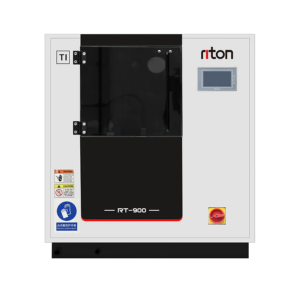
The RT-900 Plasma Polisher from Riton is developed for the post-processing stage of metal 3D printed parts. It provides a dedicated plasma polishing solution for dental manufacturing applications, giving laboratories an alternative to relying solely on manual finishing methods.
For production teams, controlled surface processing can make workflow planning easier by turning polishing into a defined manufacturing step. This allows post-processing to become a more organized part of the overall production workflow.
Process Repeatability Separates Professional Polishing Equipment From Manual Finishing
A major advantage of modern polishing equipment is improved repeatability. Dental laboratories often produce customized components rather than identical products, so each restoration may have a different design while still requiring stable and consistent production results.
Manual polishing can introduce differences between operators. Even skilled technicians may use different techniques, pressure levels, or processing times. Modern equipment helps reduce these variations by creating a more structured and consistent finishing procedure.
This does not replace technician expertise. Instead, it allows technicians to focus their skills on quality control and production management while the equipment handles more repetitive aspects of surface treatment. As laboratories scale up their digital manufacturing capabilities, repeatability becomes an increasingly important criterion when choosing a polishing solution.
Digital Workflow Connection Determines the Real Value of a Polishing Machine
A polishing machine delivers the greatest value when it fits naturally into the wider digital production workflow.
Modern dental manufacturing usually involves multiple connected stages, including digital scanning, CAD design, nesting preparation, metal printing, cleaning, finishing, and inspection.
A polishing system should support this workflow rather than operate as an isolated device.
Our RT-900 is positioned as supporting equipment for dental metal manufacturing processes, helping laboratories complete the finishing stage after additive production.
This workflow-based perspective changes how laboratories evaluate equipment. Instead of asking only whether a machine can polish parts, buyers should consider how it improves the complete production chain.
Better integration can help reduce interruptions between manufacturing stages and create a smoother path from digital design to finished components.
Production Expansion Changes How Labs Evaluate Polishing Equipment
As dental laboratories increase their use of metal 3D printing, finishing capacity can become an important factor in overall production efficiency. A workflow may lose its balance when printing output increases while polishing still relies heavily on slow manual processes. Integrating suitable finishing equipment can help laboratories keep post-processing aligned with production demands.
A 3d print polishing machine can support more organized and consistent post-processing in professional dental manufacturing environments. Its value extends beyond surface treatment, helping laboratories improve workflow consistency, manage finishing tasks, and prepare for higher production volumes.
The right polishing solution should reflect the laboratory’s actual workflow, including production volume, restoration types, and operational goals. Rather than treating polishing as an isolated final step, dental laboratories can incorporate it into the production pipeline to create a more efficient and predictable digital manufacturing process.
Driven by the practical needs of dental production, we at Riton consistently innovate to connect metal 3D printing with real-world applications. Integrating a robust polishing process further empowers laboratories to optimize efficiency and build resilient digital workflows.