Dental laboratories increasingly need more than rigid models and conventional restorative components. Flexible materials can support applications where elasticity, comfort, fit, and controlled deformation matter.
For us, the value of a resin 3D printer depends on how well it integrates with our production requirements, material portfolio, and post-processing workflow. By matching material characteristics with specific applications, we can use resin printing to expand our digital dental capabilities.
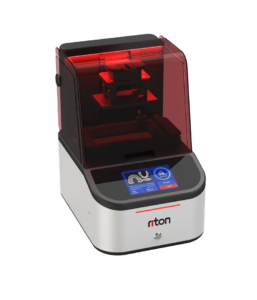
What Makes a Resin 3D Printer Valuable?
A resin 3D printer uses photopolymerization to build customized parts layer by layer from liquid photosensitive resin. The finished product can be engineered for properties such as elasticity, rebound, flexibility, or controlled deformation, depending on the material formulation.
This versatility directly translates into clinical utility. In conventional dental workflows, rigid models and guides have long been the standard, but many applications actually benefit from—or even require—material compliance. Occlusal splints need to absorb masticatory forces without fracturing. Denture bases must offer a degree of flexibility for patient comfort. Orthodontic bonding guides benefit from slight deformation to seat fully against irregular tooth surfaces.
Our resin portfolio addresses these varied needs with dedicated formulations for denture bases, splints, orthodontic bonding guides, models, surgical guides, trays, and other dental applications.
By matching the material’s mechanical behavior to the clinical indication, we can optimize not just fit and function, but also patient comfort and longevity—something that rigid printing alone cannot achieve.
Flexible Denture Bases Benefit from Elasticity
Flexible denture bases are one of the clearest applications for flexible resin. Compared with a purely rigid component, a material designed for flexibility can provide characteristics that are important for removable prosthodontic applications, including rebound elasticity, fatigue strength, and fit.
Riton’s Model F1.0 is a specialized dental photopolymer resin for producing flexible denture bases. It exhibits a bending strength of 20–28 MPa, a bending modulus of 630–740 MPa, a notched impact strength of 35–40 J/m, and a Shore D hardness of ≥40. The material is supplied in 1 kg bottles and is compatible with LCD/DLP equipment using 385–405 nm wavelengths.
These specifications give us concrete criteria when evaluating whether a flexible material is appropriate for a particular laboratory workflow. We should always match the resin’s documented properties and intended application rather than assuming that every flexible resin behaves identically.
Splints and Bruxism Pads Need Controlled Flexibility
Occlusal splints and bruxism pads present another important opportunity. These products need a combination of fit, wear resistance, strength, and appropriate material behavior. A laboratory therefore needs more than simply a resin that bends.
Riton offers Model SS1.0, a dental light-curing resin designed for occlusal splints and bruxism pads. The material features temperature-variable shape memory, allowing it to soften under 45°C, while it also features high wear resistance, fit, and biocompatibility among its product features. Its bending strength is specified at 30–40 MPa, with Shore D hardness of at least 40.
For us, this demonstrates why application-specific materials are essential. The objective is not maximum flexibility; it is achieving the appropriate balance of mechanical and functional characteristics for the intended dental product.
Orthodontic Guides Can Benefit from Flexible Resin
Orthodontic workflows can also benefit from controlled flexibility. Bracket positioning guides, for example, require detailed reproduction while maintaining sufficient flexibility for practical handling.
Riton’s Model BT1.0 is a light-curing resin intended for bracket positioning guides. It is highly flexible, biocompatible, and capable of high-detail reproduction. The material has an elongation at break of 100%, a tear strength of 7.9–8.5 N/mm, and Shore A hardness of at least 30. It is designed for LCD/DLP equipment using 385–405 nm wavelengths.
This illustrates a key point for us: flexibility should be evaluated alongside detail reproduction, tear resistance, dimensional requirements, and the actual handling conditions of the finished product.
Why the Printer Matters as Much as the Resin
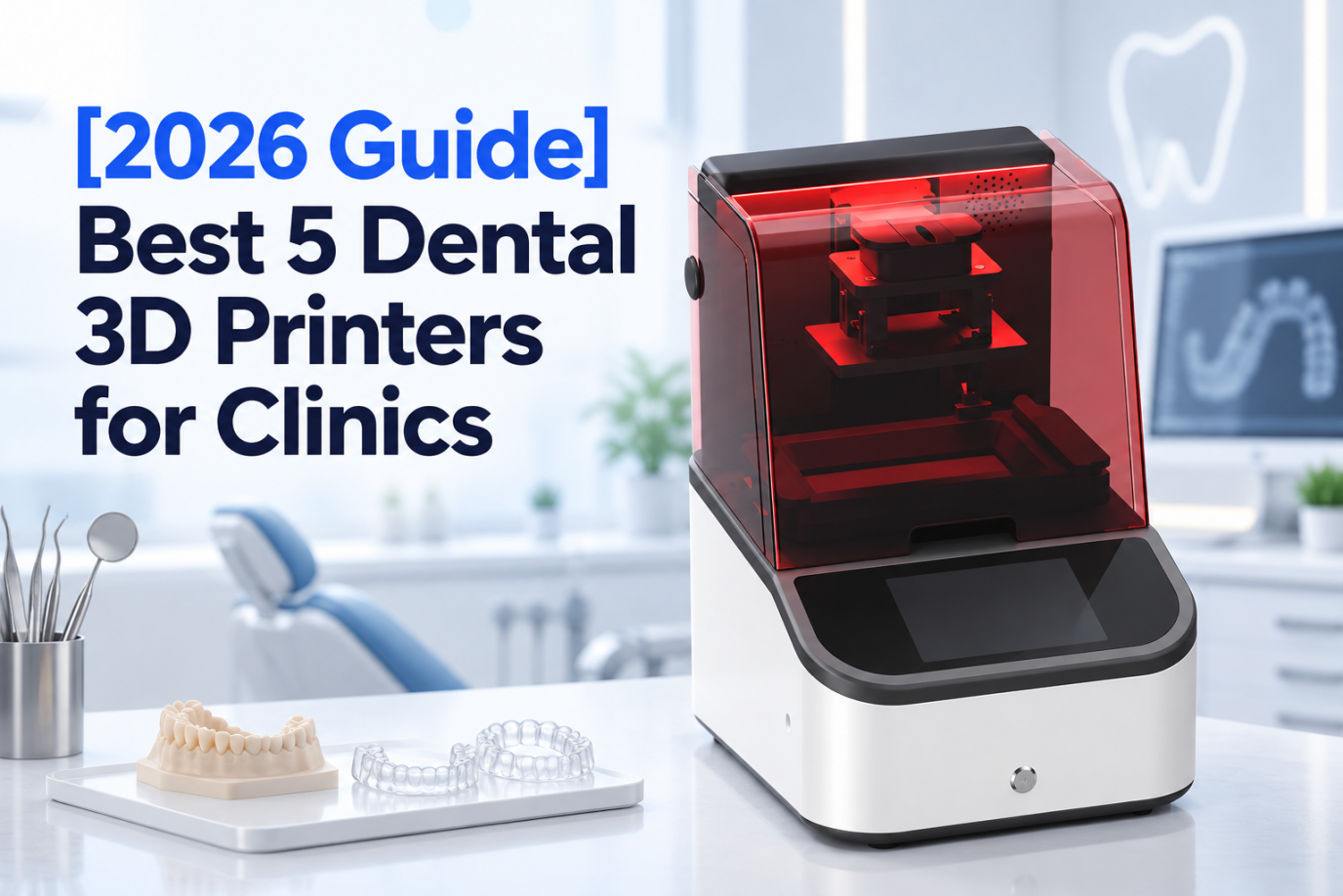
Material selection alone cannot determine production performance. We also need a reliable printer that can maintain consistent processing across repeated jobs. Riton’s RXDent-D130 is positioned around stability and intelligent production quality, with a large molding size of 130 × 70 × 120 mm and available resolutions of 1920 × 1080 pixels.
Its one-touch operation, automatic calibration, automatic resin refill, dual-vat switching, and dual heating system are particularly relevant to production efficiency. These functions can help us simplify routine operation and manage different production requirements more conveniently.
The dual-vat switching concept is especially useful when our laboratory needs greater workflow flexibility. Instead of treating resin printing as a single-material process, we can consider how equipment design, material selection, and production scheduling work together.
How We Should Evaluate Flexible Resin Printing for Our Lab
When comparing flexible resin systems, we should start with the applications we actually produce. Denture bases, splints, bruxism pads, and orthodontic guides have different performance requirements, so the appropriate resin should be selected according to documented specifications and intended use.
We should then assess printer resolution, build volume, resin compatibility, operating efficiency, calibration, material handling, post-processing, and technical support. Riton provides dental-specific resin printers and a broad material portfolio, while its wider ecosystem includes dental resin 3D printer and digital dental solutions.
For us, the strongest flexible resin strategy is therefore not simply choosing the most flexible material. It is building a controlled digital workflow in which the printer, resin, application, and production process are matched carefully. With the right combination, a resin 3D printer can help us expand dental applications while maintaining the precision, consistency, and efficiency required for professional laboratory production.