The choice of a metal laser 3D printer is a major decision for dental laboratories and manufacturers, because the equipment directly affects production stability, workflow efficiency, and future expansion potential. A machine that looks suitable on paper may not always meet the actual requirements of a digital manufacturing environment.
The right selection process requires more than comparing prices or reviewing isolated specifications. Buyers need to understand how the printer will fit into their existing CAD/CAM workflow, what materials they plan to use, and whether the supplier can support long-term production goals.
At Riton, we approach metal additive manufacturing from a practical production perspective. We believe a quality printer should serve the complete manufacturing process, not operate as a standalone piece of equipment.
The First Question Is Not “Which Printer?” but “What Will You Produce?”
Before comparing different machines, buyers should define their manufacturing purpose. A dental laboratory producing customized restorations has different requirements from an industrial manufacturer producing larger quantities of metal components.
Production volume, restoration type, material selection, and workflow organization all influence equipment decisions. A laboratory that mainly produces dental frameworks may prioritize reliability and digital workflow integration, while a larger production facility may focus more on process consistency and manufacturing efficiency.
The phrase metal laser 3d printer covers a wide range of systems, but not every printer is designed for the same production environment. Understanding the intended application helps buyers avoid selecting equipment based only on marketing descriptions.
The required output should determine the evaluation criteria. Questions such as how many parts are produced daily, which alloys are required, and how the printer connects with existing design software should be answered before comparing suppliers.
This approach changes the purchasing process from searching for the “most advanced” machine to identifying the most suitable manufacturing solution.
Judge Printer Quality Through the Entire Manufacturing Process
A high-quality printer should be evaluated as part of a complete production chain. Metal additive manufacturing involves multiple stages, including digital design preparation, build planning, laser melting, powder management, and post-processing.
The printing stage is important, but it is only one part of the workflow. If preparation processes are inefficient or operators cannot easily manage production tasks, even advanced equipment may not deliver the expected value.
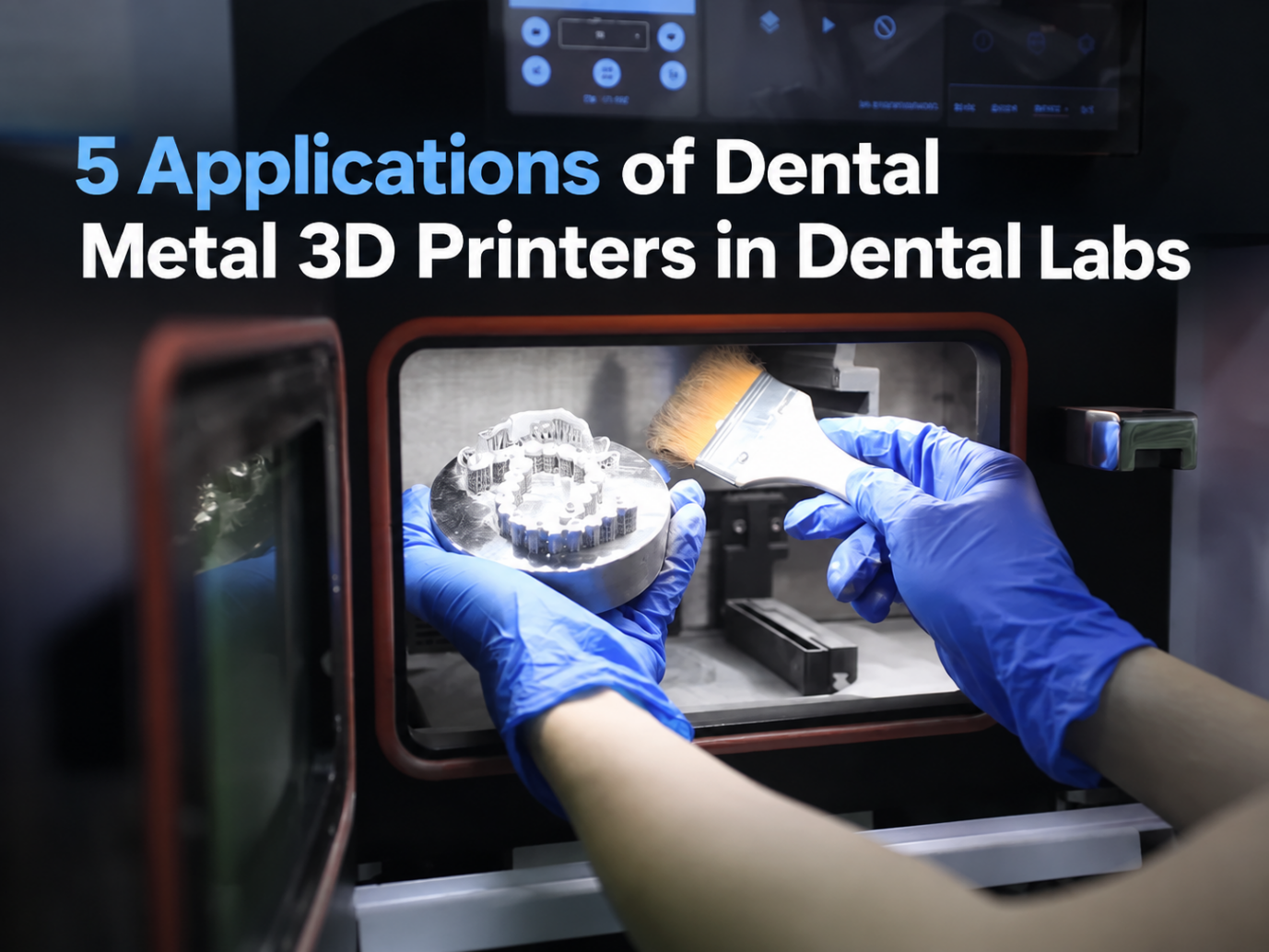
SLM technology is commonly used in metal additive manufacturing because it creates components by selectively melting metal powder layer by layer through a laser-based process. For dental applications, this workflow allows laboratories to manufacture metal components directly from digital designs.
However, buyers should examine how the printer supports their daily operations. Factors such as machine usability, workflow integration, and production organization often have a direct influence on practical results.
Our M-200D at Riton is a dental SLM metal 3D printing solution designed for dental manufacturing workflows. The system provides a build volume of 220 mm × 150 mm × 140 mm and is intended for dental metal printing applications.
When reviewing equipment, buyers should focus on whether the complete process is manageable, repeatable, and suitable for their production requirements.
Separate Real Equipment Value From Technical Specification Lists
Technical specifications are important, but they should not become the only basis for decision-making. A professional buyer needs to understand which specifications influence actual production outcomes.
Build size, laser system configuration, material compatibility, and workflow design can all affect how efficiently a printer operates within a laboratory environment. However, these factors only create value when they match the user’s manufacturing needs.
For example, a larger build area may be useful for certain production models, but it does not automatically mean better results for every laboratory. Similarly, a printer designed for specific applications may provide better workflow efficiency than a system with broader but less targeted capabilities.
Evaluating different metal 3d printer manufacturers requires looking beyond specification sheets. Buyers should examine whether the supplier understands the application environment and whether the equipment is designed around real production challenges.
A reliable evaluation process combines technical information with practical questions:
Does the printer fit existing digital workflows?
Can operators manage daily production efficiently?
Does the supplier provide clear technical support?
Is the equipment suitable for expected future requirements?
These questions provide a more accurate picture than comparing numbers alone.
Choose a Manufacturer That Supports Long-Term Production
The relationship with the supplier does not end after equipment delivery. Metal printing systems require technical knowledge, operational experience, and ongoing support to achieve stable production.
A capable manufacturer should help customers understand installation requirements, workflow setup, operation procedures, and maintenance considerations.
At Riton, we provide metal additive manufacturing solutions and technical support to help customers integrate 3D printing equipment into their production environments. We focus on helping users build reliable and practical manufacturing processes, rather than simply supplying hardware.
Supplier experience also matters because different industries have different expectations. Dental laboratories require precision-focused workflows, while other manufacturing sectors may prioritize different production factors.
When comparing a metal laser 3d printer, buyers should evaluate the manufacturer’s understanding of their industry, not only the equipment itself.
Long-term cooperation becomes especially valuable as production requirements change. A supplier that can provide technical communication and application support can help customers adapt their manufacturing strategy over time.
A Better Selection Method Leads to a Better Manufacturing Investment
Choosing a quality metal laser 3D printer requires a structured evaluation process. A sound purchasing decision starts with understanding production objectives, then matching equipment capabilities, workflow requirements, and supplier support.
A successful investment is not defined only by purchasing advanced technology. It depends on whether the equipment can consistently support the user’s manufacturing goals.
At Riton, we focus on helping customers evaluate metal additive manufacturing solutions according to real production scenarios. By considering the entire workflow instead of isolated machine features, laboratories and manufacturers can make more informed equipment decisions.
The best printer is the one that fits the production strategy behind it. Careful evaluation allows companies to build a reliable digital manufacturing foundation and gain greater value from their investment in metal printing technology.