Patient comfort is influenced long before a dental restoration is placed. The geometry, material volume, and manufacturing method chosen during laboratory production can all affect the final result. For dental labs, lightweight 3d printing is therefore worth considering as a design and manufacturing objective, especially where metal restorations must provide functional structure without unnecessary bulk.
The issue is not simply making every restoration thinner. A clinically appropriate design still has to meet its intended structural requirements. The more useful goal is controlled material placement: putting metal where the design requires it while avoiding unnecessary volume.
Why Restoration Weight Becomes a Comfort Issue
A restoration becomes part of the patient’s oral environment. Its size and mass can influence how noticeable it feels, particularly when a design contains a relatively large metal framework or other substantial structure.
That does not mean weight alone determines clinical comfort. Fit, geometry, surface characteristics, occlusion, material selection, and the specific restoration design also matter. Still, minimizing unnecessary material can be a sensible design objective when it can be achieved without compromising the intended function of the restoration.
Digital manufacturing makes this objective easier to consider at the design stage. Instead of treating material removal as a finishing operation, technicians can evaluate the three-dimensional structure before production begins.
For laboratories, the question becomes more specific: can the manufacturing process reproduce a carefully optimized digital structure accurately enough to make material efficiency part of routine production?
The Design Problem: Less Metal Without Losing the Intended Structure
Reducing weight is fundamentally a geometry problem. Simply removing material from a conventional design may weaken important areas or change the intended shape.
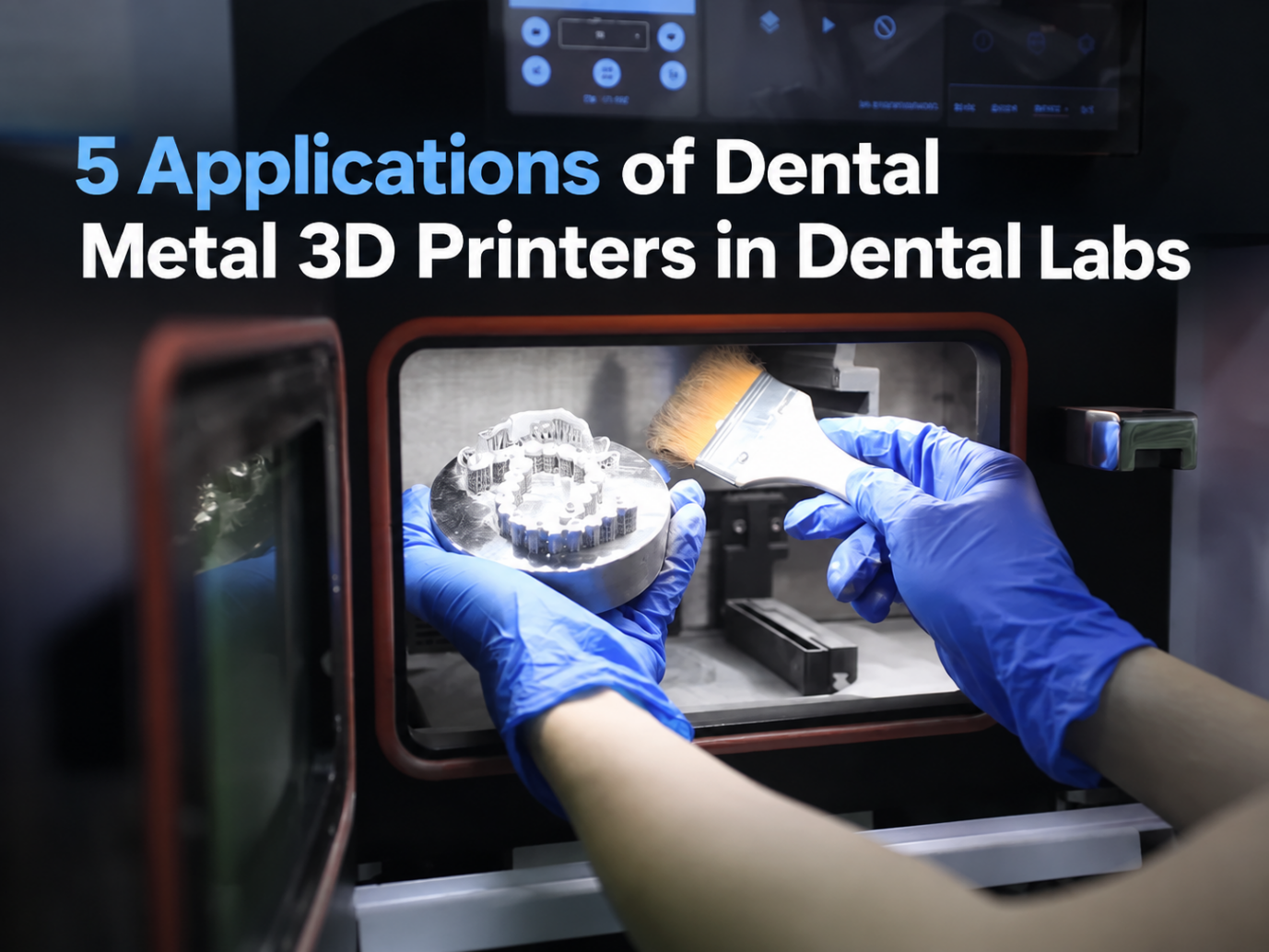
Additive manufacturing approaches the problem differently. The part is generated layer by layer from digital information, which supports the production of complex three-dimensional geometries. Selective Laser Melting (SLM), used in our dental metal printers at Riton, selectively melts metal powder with a high-energy laser according to a digital 3D model.
That manufacturing method is relevant because the laboratory can work from a digitally defined structure rather than relying solely on conventional subtractive or manual fabrication approaches.
Lightweight 3D printing should therefore be understood as more than a machine setting. It is a broader design strategy in which the laboratory considers where material is genuinely necessary before the restoration enters production.
The practical benefit is control. A digital workflow gives technicians an opportunity to examine geometry, make design decisions, and then manufacture the resulting structure using a repeatable process.
Where Metal 3D Printing Changes the Design-to-Production Equation
A major advantage of metal additive manufacturing for dental labs is the direct relationship between digital design and physical production. Our MLAB is specifically positioned for dental metal restoration production and uses SLM technology. Its listed melting area is Φ100 × 90 mm, including the build plate.
The machine uses a 250W single-fiber laser, supports 20–60 μm layer thickness, and uses nitrogen or argon as protective gas. These specifications describe the production platform rather than guaranteeing a particular restoration’s comfort or weight.
Production capacity is also relevant to whether optimized designs can be used efficiently in a commercial laboratory. We state that MLAB can print 100 crowns or seven frameworks in 2.5 hours in the fastest case, while noting that actual time varies according to conditions.
For us, that distinction matters. A design concept only becomes valuable when the manufacturing system can reproduce it consistently within the laboratory’s normal production workflow.
Why Material Choice Matters as Much as Geometry
Geometry is only one side of the weight equation. The selected alloy also affects the physical characteristics of the manufactured restoration, so material choice should be considered alongside the intended design.
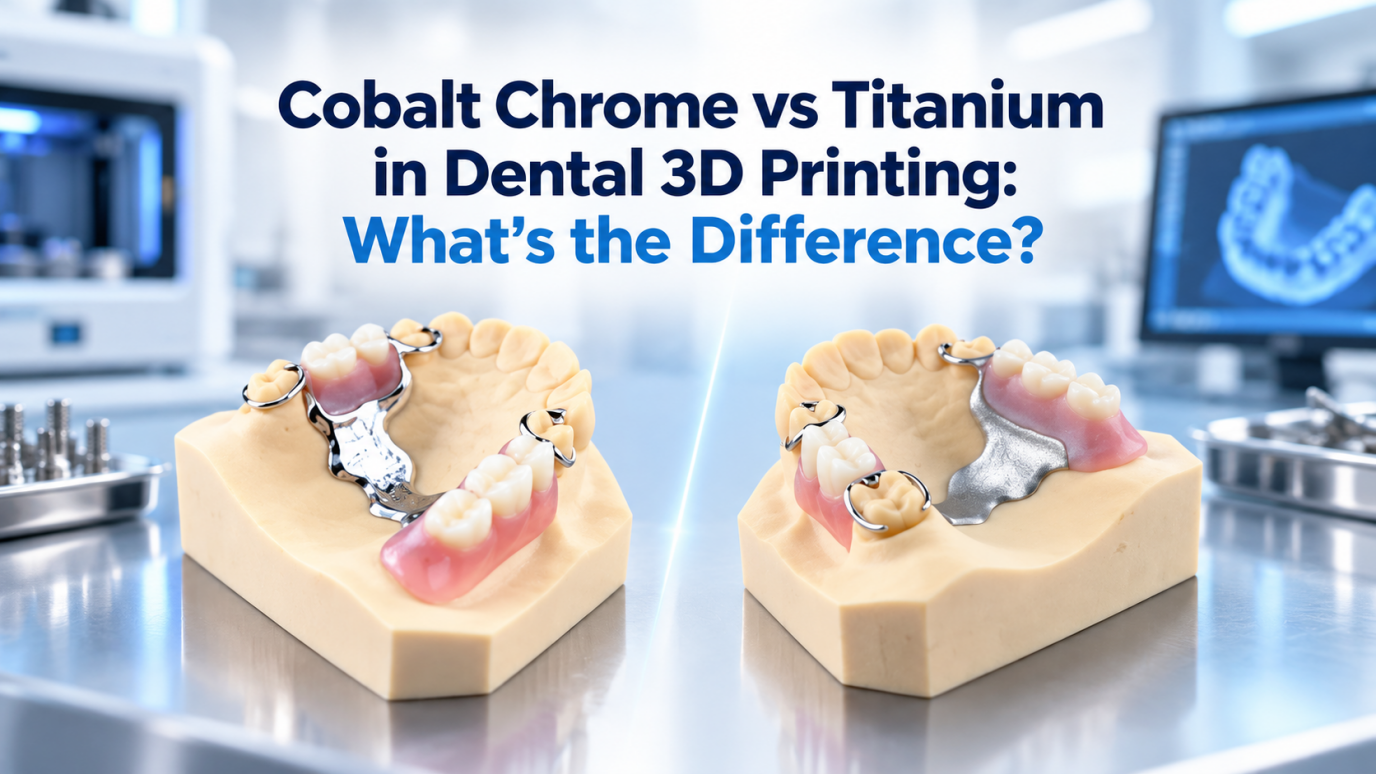
The MLAB is specified for CoCr alloy and titanium alloy. At Riton, our dental metal material range also identifies CoCr and titanium among its dental SLM materials.
Those materials should not be treated as interchangeable simply because both can be processed by the same printer. A laboratory must select material according to the specific restoration, applicable requirements, and validated manufacturing process.
That is why lightweight 3D printing should not be reduced to choosing a particular alloy. A meaningful weight strategy combines material selection with geometry, manufacturing parameters, post-processing, and the intended application.
What a Dental Lab Should Look for in Lightweight Production
Equipment selection should begin with whether the printer can support the laboratory’s actual design and production requirements. Build volume is one consideration because the available space determines what geometries can be manufactured in a given build.
MLAB’s compact footprint is another documented characteristic. The manufacturer lists printer dimensions of 610 × 615 × 890 mm and states that the printer occupies approximately 0.36 m².
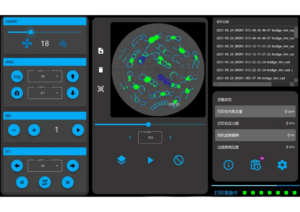
Production control also matters. Our MLAB includes Riton Controller software with real-time status and progress feedback, while the product page describes remote transmission of printing data and powder quantity monitoring.
For laboratories evaluating 3d metal printer manufacturers, these details are more useful than broad claims about lightweight production. The relevant question is whether the equipment provides the controlled digital manufacturing environment needed to turn optimized restoration designs into physical parts.
A printer cannot determine whether a restoration is comfortable. It provides the manufacturing capability through which a carefully designed restoration can be produced.
Comfort Starts Before the Restoration Reaches the Patient
The case for lightweight manufacturing begins with design, not with the printer itself. A laboratory first needs to understand where material is necessary and where unnecessary volume may be removed without undermining the intended structure.
Digital SLM production then provides a route for translating that geometry into a metal component. MLAB’s documented dental focus, CoCr and titanium compatibility, 20–60 μm layer thickness, and dedicated production area make it a platform designed for this type of digital dental manufacturing.
We take a straightforward approach: design restorations with comfort in mind from the outset, rather than trying to correct comfort issues after manufacturing. As a 3D metal printer manufacturer, we play a vital role by offering hardware that precisely executes digital designs, but final quality still hinges on the laboratory’s design decisions, material choices, process monitoring, and finishing techniques.
Consequently, modern dental laboratories should view lightweight 3D printing as part of a broader design-to-production strategy. The goal isn’t just saving metal—it is engineering balanced restorations with intentional material distribution, supporting an accurate, consistent, and practical workflow for commercial lab production.