Dental laboratories increasingly rely on digital workflows to produce accurate models while managing growing case volumes. Choosing the right liquid resin 3D printer therefore requires more than comparing resolution or printing speed. We need to consider production volume, dimensional accuracy, surface quality, software compatibility, and the resin system used alongside the printer.
Start With Your Dental Model Production Requirements
Before selecting the best liquid resin 3D printer, we recommend defining the models a laboratory produces most frequently. Orthodontic models, working models, jaw models, and other dental applications can place different demands on printing accuracy, surface quality, durability, and production speed.
Material compatibility should also be considered at the beginning. Riton’s Model S1.0 dental model resin is specifically developed for dental models and supports applications including orthodontic thermoforming models and opposing models. It is compatible with LCD/DLP equipment, operates at 385–405 nm, and is available in 1 kg bottles. The material also carries NMPA, FDA, and CE certifications.
Prioritize Resolution and Surface Detail
For dental models, small anatomical details and accurate reproduction are essential. A printer with a high-resolution imaging system can provide a stronger foundation for reproducing digital designs, but resolution should be evaluated together with light uniformity, pixel size, and the printer’s overall optical system.
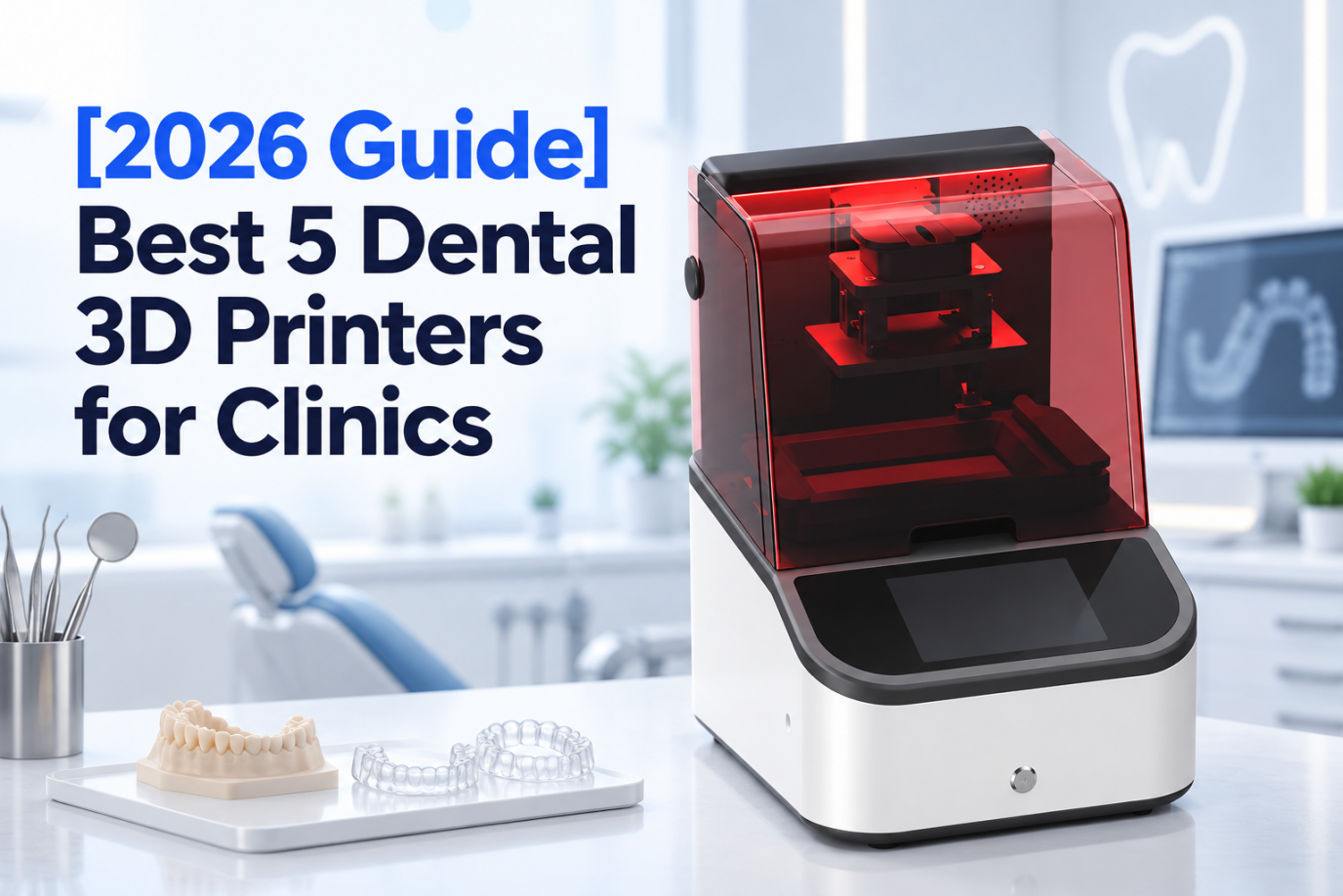
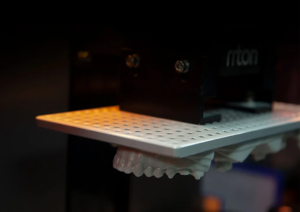
Riton’s RXDent-L230 is an LCD dental resin 3D printer equipped with an 8K monochrome screen featuring 7680 × 4320 resolution. Its pixel size is 30 μm, while the molding size reaches 228 × 128 × 150 mm. These specifications give laboratories a combination of fine imaging and a relatively large production area for dental models.
The L230 also uses 8x anti-aliasing technology. By smoothing transitions between pixels, this technology is designed to reduce jagged edges and improve the visual texture of printed surfaces. For dental laboratories, these details can matter when producing models that require clean contours and precise representation of digital geometry.
Balance Printing Speed With Production Volume
Accuracy is only one part of commercial dental manufacturing. A laboratory processing numerous cases also needs predictable throughput. We therefore recommend comparing the complete production cycle rather than focusing only on nominal printing speed.
The RXDent-L230 is designed around high-speed production, with Riton reporting an average layer printing time of just 1-8 s/layer. Its 228 × 128 × 150 mm molding area can also accommodate larger batches of dental models, helping laboratories make better use of each production cycle.
For business operations, this combination can be particularly relevant when demand fluctuates. A printer that combines a larger build area with rapid layer processing can give production teams more flexibility when scheduling multiple orders, provided the chosen resin and workflow settings are appropriate for the application.
Evaluate Software and Workflow Compatibility
We should not evaluate a dental printer independently from its software. File preparation, machine management, task scheduling, and compatibility with existing design tools can directly influence how easily a laboratory moves from digital files to finished models.
The RXDent-L230 is equipped with Riton’s RTware intelligent software, which supports file preprocessing, machine management, and printing task management. Riton also states that the platform is compatible with mainstream modeling software and incorporates intelligent algorithms intended to simplify printing operations while supporting efficiency and precision.
This workflow perspective is important when choosing among dental printing systems. A technically capable printer can still create operational bottlenecks if file preparation, production management, or machine operation is unnecessarily complicated.
Consider the Resin Ecosystem, Not Just the Printer
We believe the best liquid resin 3D printer should be evaluated as part of a complete material ecosystem. Dental resin determines how a printer can actually be used, so laboratories should verify application compatibility, wavelength requirements, mechanical properties, cleaning requirements, and available certifications.
Riton offers dental-specific resin categories covering models, surgical guides, gingiva masks, casting wax, IBT, splints, try-ins, denture bases, trays, crown bridges, crowns, and denture teeth. This breadth allows laboratories to consider equipment and materials together as their digital production requirements expand.
Choosing a Reliable Dental Printing Partner
We also recommend evaluating the supplier behind the equipment. Experienced dental printing providers should offer more than hardware; they should understand materials, applications, software, training, and technical support. Riton focuses specifically on digital dentistry and provides metal and resin 3D printers, dental materials, automatic wire bending equipment, and digital platforms.
A complete ecosystem can make it easier for laboratories to standardize processes and expand production without replacing their entire digital infrastructure. This is especially relevant for businesses planning long-term investments rather than purchasing a printer for a single application.
Building a Smarter Dental Model Workflow
Choosing a liquid resin printer should ultimately come down to the relationship between accuracy, production capacity, material compatibility, software, and long-term workflow requirements. We believe the right system should support both today’s workload and the laboratory’s plans for future digital growth.
At Riton, we designed the RXDent-L230 around this balance. Its 8K monochrome screen, 30 μm pixel size, 8x anti-aliasing and 228 × 128 × 150 mm molding size provide a strong foundation for high-precision, high-volume dental model production. By combining the printer with dedicated dental resins and digital workflow solutions, we help laboratories move toward more efficient and scalable production.