A dental laboratory evaluating metal additive manufacturing can easily focus on the purchase quotation and miss the larger financial question. The real issue is not simply how much a metal 3d printing machine costs. It is whether the equipment can generate enough usable production, consistently enough, to recover that investment.
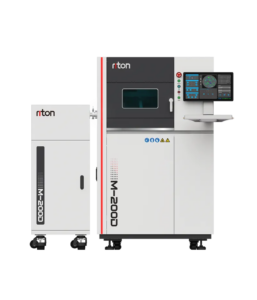
For us at Riton, ROI starts with workload rather than equipment price. A printer that is underused can become an expensive asset, while a suitably sized system can turn recurring outsourced production and manual processing into a more controllable in-house workflow.
Why Purchase Price Alone Gives the Wrong ROI Picture
Metal printer prices vary substantially according to configuration, production scale, and intended application. The broader dental 3D printing market includes systems at very different investment levels, so comparing prices without comparing production capacity can produce a misleading conclusion.
A better calculation begins with annual production requirements. List the number of crowns, bridges, frameworks, or other metal components your laboratory currently produces or sends outside. Then estimate the current cost attached to that workload, including external manufacturing, transportation, remakes, and other directly attributable expenses.
The next step is to identify the internal costs created by ownership. These may include metal powder, protective gas, electricity, post-processing, equipment maintenance, operator time, and depreciation. The resulting figure is more useful than a headline purchase price because it reflects the cost of actually producing each case.
Turn Production Capacity Into a Cost Model
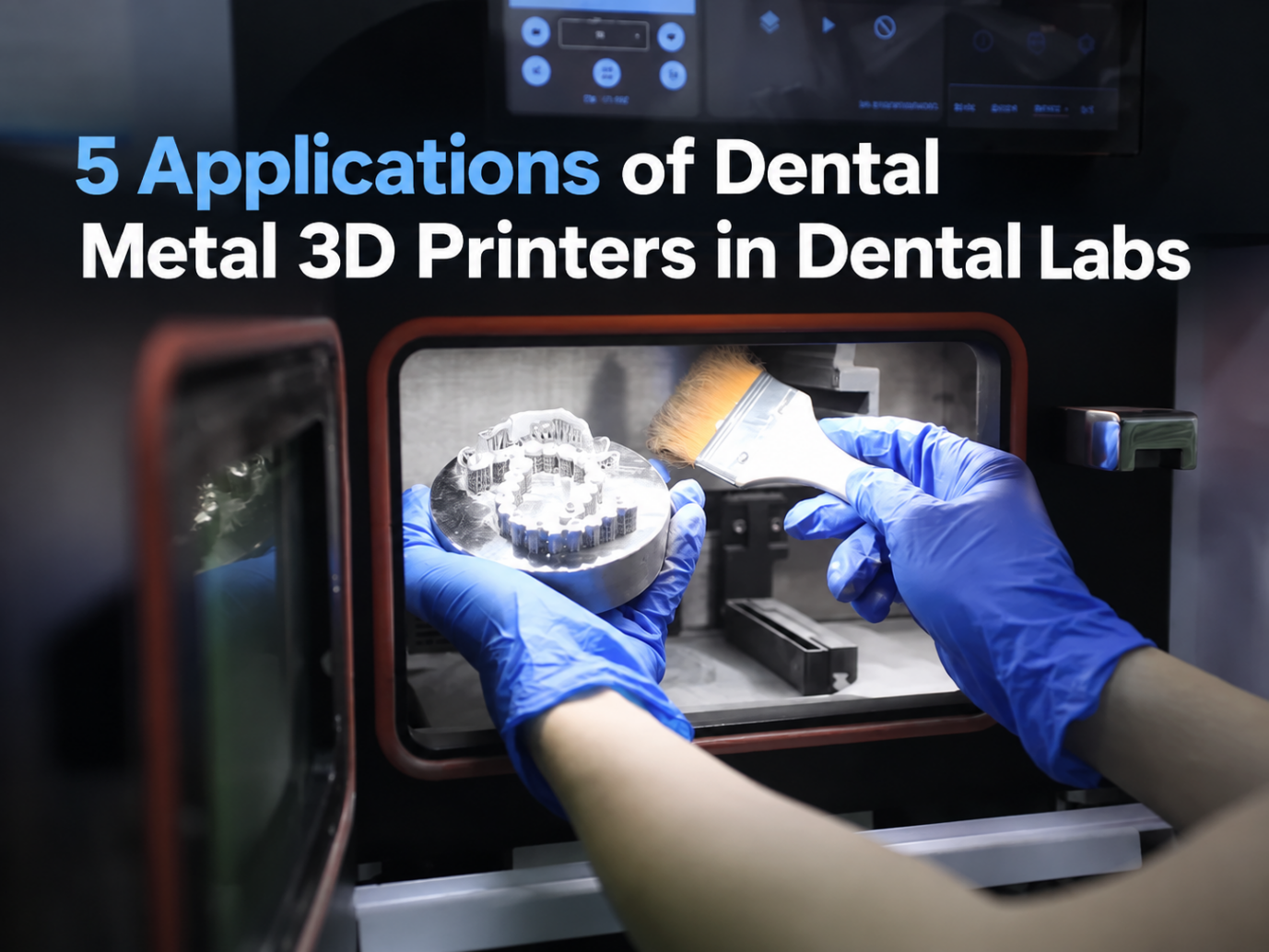
Capacity matters because SLM systems manufacture multiple parts within a build rather than treating every restoration as an individual machine cycle. At Riton, our M-150, for example, lists production of up to 200 metal crowns or 17 frameworks in 4.5 hours. Its build area is φ150 × 140 mm including the build plate.
That specification does not automatically mean a laboratory will achieve the same output. Actual utilization depends on case geometry, nesting, support structures, setup, post-processing, and scheduling. The useful ROI question is therefore: how much of the available capacity can your lab realistically fill?
Our MLAB illustrates a different investment logic. Its published specifications show a φ100 × 90 mm melting area and production of up to 100 crowns or seven frameworks in 2.5 hours in the fastest case, with actual time varying according to conditions.
A smaller system can therefore make sense when space or production volume limits the business case. The objective is not to maximize theoretical output. It is to match available capacity with repeatable demand.
Compare Investment Levels With Actual Workload
A useful comparison between top metal 3d printing companies should therefore begin with throughput rather than brand recognition. Ask how many units fit into a typical build, how long that build takes, what materials are supported, and what additional equipment the workflow requires.
At Riton, our M-200D provides an example of scaling toward higher production. Its published configuration uses two fiber lasers, a 220 × 150 × 140 mm melting area, and lists production of up to 430 crowns or 35 partial frames in 5.5 hours. It supports CoCr and titanium, with a dedicated glove box and explosion-proof circulation specified for titanium.
Those figures matter financially only if demand can support the additional capacity. A laboratory producing occasional framework cases may gain little from paying for unused throughput. A production-focused operation serving multiple clinics may evaluate the larger capacity very differently.
For this reason, top 3d metal printing companies should be assessed against the laboratory’s production profile, not through a simple equipment-price ranking.
Where Payback Calculations Commonly Go Wrong
The first mistake is treating printer utilization as a constant. A build schedule that looks full on paper may become less productive because cases arrive unevenly, designs require revision, or post-processing creates a bottleneck.
The second mistake is counting only the printer. Metal SLM production involves more than the laser system itself. Powder handling, gas supply, cleaning, cutting, heat treatment, and finishing can all influence the investment required for a complete workflow.
Our M-150 page specifies nitrogen or argon protective gas, while its broader product range includes dedicated auxiliary equipment such as nitrogen generation and other supporting systems.
A third error is using outsourced prices as if they were pure manufacturing costs. External laboratory fees can contain design, finishing, logistics, service, and commercial margins. A fair ROI model should compare equivalent deliverables rather than simply comparing powder consumption with an invoice.
A Practical Decision Rule for Dental Labs
A laboratory can build a straightforward model using four numbers: initial equipment investment, annual in-house production cost, current annual external production cost, and expected annual production volume.
Suppose a lab expects to shift a defined number of metal cases in-house. Calculate the annual difference between external and internal production costs. Then divide the equipment investment by that annual difference to obtain a simple payback estimate. Adjust the calculation if additional infrastructure, financing, maintenance, or staffing materially changes the economics.
Production capacity should be tested against actual order history before purchasing. A laboratory should also examine whether its CAD workflow can reliably supply printable files and whether technicians can handle nesting, support preparation, powder management, and post-processing without creating a new bottleneck.
Our approach at Riton is to view the printer as one part of the digital production chain rather than an isolated machine. The MLAB, M-150, and M-200D occupy different production positions, allowing the investment discussion to start with workload and workflow requirements rather than an arbitrary equipment tier.
Making the ROI Decision
A sensible metal 3d printing machine investment should earn its place through utilization. Price establishes the capital requirement, but throughput, case mix, internal processing costs, and achievable production volume determine whether that capital can be recovered.
Our recommendation is to build the financial model from your own last 12 months of production data. Identify which metal cases can realistically move in-house, calculate the complete cost per case, and compare that figure with the current external cost.
The strongest business case is not necessarily the lowest-priced system. It is the configuration whose usable capacity aligns with sustained demand. That is also the most reliable way to compare top 3d metal printing companies and determine whether in-house SLM production can deliver a defensible return for your dental laboratory.