Dental laboratories and clinics rarely use one resin for every digital workflow. A model, surgical guide, gingiva mask, splint, denture base, or temporary restoration can require different material characteristics and regulatory considerations.
We therefore recommend selecting dental resin for 3D printing according to the intended application first, then verifying printer compatibility, mechanical performance, processing requirements, and certification. At Riton, we develop dental-specific photopolymer materials alongside our resin 3D printers to support more predictable digital dental production.
Start With the Dental Application
We begin material selection by defining what the printed product needs to accomplish. Dental model resin should prioritize dimensional accuracy, clean surfaces, efficient processing, and production throughput. A surgical guide requires a different performance profile because it is intended for a specific clinical workflow. Splints, denture bases, temporary restorations, and gingiva masks likewise require application-specific properties rather than a generic “dental resin.”
Riton’s resin portfolio is organized around these use cases. Our product range includes dedicated materials for dental models, surgical guides, gingiva masks, casting wax, IBT, splints, try-ins, denture bases, trays, crown bridges, crowns, and denture teeth. This application-based structure helps laboratories match the material to the intended workflow instead of treating all photopolymers as interchangeable.
Match Resin Properties to Production Demands
After identifying the application, we recommend comparing the material’s measurable properties. Depending on the use case, relevant factors can include bending strength, bending modulus, impact strength, water absorption, hardness, viscosity, curing wavelength, and post-processing behavior. These parameters provide a more useful basis for material selection than marketing terms such as “high performance” alone.
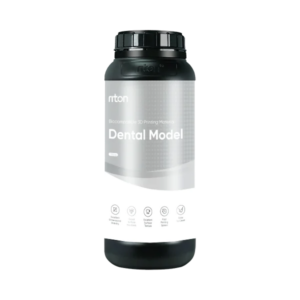
For laboratories producing large quantities of models, production efficiency can be especially important. Riton Model S1.0 is specifically developed for dental models and is suitable for mass production. It is designed for fast molding, easy cleaning, high-temperature resistance, and a high cost-performance ratio. The material is intended for orthodontic thermoforming models, opposing models, and other common dental model applications.
Check Printer and Wavelength Compatibility
Material compatibility must be confirmed before purchasing or standardizing a resin. A resin can only perform as intended when the printer’s optical system, wavelength, exposure parameters, build platform, and processing workflow are appropriate for it. We recommend checking the manufacturer’s compatibility information rather than assuming that every dental resin works identically across machines.
Model S1.0 is compatible with LCD/DLP equipment and has an applicable wavelength of 385–405 nm. It is supplied in 1 kg bottles and is available in Grey, Yellow, and Light Pink. These details give production teams practical criteria for checking whether the material fits their existing equipment and color requirements.
Consider Mechanical and Handling Requirements
Mechanical data can help laboratories distinguish materials that may look similar but behave differently after curing. Riton Model S1.0 has a bending strength of 60–70 MPa, bending modulus of 1450–1550 MPa, notched impact strength of 20–22 J/m, water absorption of ≤1.2%, and hardness of at least Shore D 70. Its listed viscosity is 150–800 mPa.s.
These specifications should be interpreted according to the intended application rather than viewed as universal indicators of quality. For example, a dental model material may be optimized for stable handling and efficient production, while a flexible denture-base resin needs different mechanical characteristics. Selecting by application helps prevent material-performance mismatches.
Evaluate Certifications and Supplier Expertise
For business dental production, certification and supplier experience deserve the same attention as technical specifications. We recommend confirming which certifications apply to the specific resin and intended use, rather than assuming that a supplier’s general certifications cover every material in its portfolio.
Model S1.0 is listed by Riton with NMPA, FDA, and CE certifications. Riton’s broader resin materials portfolio is developed specifically for dental applications, and the company states that multiple UV-curing resin consumables have obtained certifications from NMPA, FDA, and other organizations. We also develop resin printers, metal printers, and other dental manufacturing equipment, allowing customers to evaluate materials within a wider digital production ecosystem.
Why Dental 3D Printing Resin Manufacturers Matter
When comparing dental 3D printing resin manufacturers, we believe buyers should examine more than the resin catalog. Consistent manufacturing, application knowledge, technical documentation, printer compatibility, training, and after-sales support can influence production reliability over the long term.
Our approach at Riton connects materials with equipment and digital workflows. We provide resin 3D printers and dental-specific materials while also offering printer operation and post-processing training. This combination allows us to support laboratories not only in selecting a resin but also in establishing repeatable production practices.
Build an Application-Based Resin Strategy
Choosing dental resin is ultimately an exercise in matching material performance to the job. We recommend starting with the intended application, then checking mechanical requirements, printer and wavelength compatibility, processing characteristics, certifications, and supplier support. This method can help dental businesses avoid unnecessary trial and error while building a more consistent workflow.
At Riton, we continue developing dental-specific resin materials for different stages of digital dentistry. Model S1.0 demonstrates our application-focused approach, combining fast molding, easy cleaning, mass-production capability, high-temperature resistance, and verified material specifications for dental models. By selecting each resin according to its intended purpose, we can help laboratories pursue greater consistency, efficiency, and confidence in digital dental manufacturing.