Dental laboratories increasingly view resin as a strategic production input rather than a simple consumable. As digital workflows expand, the choice of UV curing material can influence printing consistency, dimensional accuracy, surface quality, post-processing, and application suitability. We therefore see growing attention toward dental 3D printing resin manufacturers that can provide application-specific materials and technical support, rather than suppliers offering generic photopolymer resin alone.
Material Quality Directly Influences Production Results
For us, the first reason to evaluate a UV resin supplier carefully is straightforward: the material becomes part of the finished dental product. Resin formulation can influence characteristics such as strength, hardness, wear resistance, water absorption, viscosity, and dimensional behavior. The appropriate properties depend heavily on whether we are producing a model, surgical guide, splint, denture base, tray, or another dental application.
The FDA also emphasizes intended use when evaluating materials used in printed dental devices. For certain cleared dental devices, manufacturers need to demonstrate that the finished material has appropriate physical and material properties for its intended application. This reinforces why we should assess dental resin according to the specific product we intend to manufacture rather than selecting materials based only on printer compatibility.
Application-Specific Resins Give Labs More Flexibility
A modern dental laboratory may handle a wide range of digital cases, and one resin cannot necessarily meet every production requirement. We may need different characteristics for an orthodontic model than for a surgical guide, splint, denture base, or casting pattern. A supplier with a broad application-specific portfolio can therefore help us build a more controlled manufacturing process.
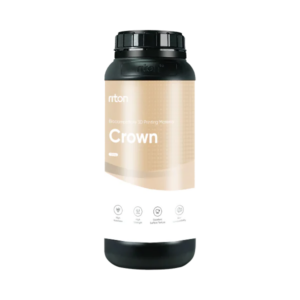
Riton’s resin portfolio covers dental model, surgical guide, gingiva mask, casting wax, IBT, splint, try-in, denture base, tray, crown bridge, crown, and denture teeth applications. This product range allows us to select materials around the intended application instead of forcing multiple workflows into a single resin formulation.
The specifications of individual materials also demonstrate why application-specific selection matters. For example, Riton’s Model HS1.0 is designed for occlusal splints and bruxism pads and lists high strength, high wear resistance, fitness, and biocompatibility among its features. It is specified for 385–405 nm LCD/DLP equipment and carries FDA and CE certifications.
Consistent Material Properties Matter at Production Scale
Consistency becomes increasingly important as laboratories move from occasional prototyping toward repeatable production. If viscosity, curing behavior, or mechanical characteristics vary between batches or are poorly matched to a printer, technicians may need to compensate through parameter adjustments or additional quality checks. That can undermine the efficiency benefits of digital manufacturing.
We therefore look for suppliers with experience in both materials and 3D printing equipment. Riton states that its UV curing resin materials were developed specifically for dental applications based on years of research and manufacturing experience in 3D printing equipment and materials. The company also reports that multiple UV curing resin consumables have obtained certifications from NMPA, FDA, and other organizations.
This equipment-and-materials expertise can be valuable because UV resin printing is a system rather than an isolated consumable. Our resin printers use UV curing to polymerize liquid photosensitive resin layer by layer, while post-processing includes cleaning, UV curing, support removal, and surface smoothing.
Compatibility Should Be Evaluated Beyond the Printer
When we purchase dental resin, printer compatibility is only the beginning. We also need to consider wavelength, curing behavior, viscosity, intended application, post-processing requirements, and the final properties expected from the printed product.
Riton’s Model S1.0, for example, is designed for dental models and mass production. It is specified for 385–405 nm wavelengths and LCD/DLP equipment, with a viscosity range of 150–800 mPa·s. Its listed certifications include NMPA, FDA, and CE. These details give laboratories concrete criteria for matching a material with the intended workflow.
Post-processing is another consideration. Riton provides dedicated post-processing training covering techniques intended to improve the texture and finish of printed products. Its service offering also includes printer-operation training and online technical support, giving laboratories access to support beyond the initial resin purchase.
What to Look for in Dental 3D Printing Resin Manufacturers
As we compare dental 3D printing resin manufacturers, we recommend evaluating the complete supplier proposition. Product breadth, documented specifications, application-specific formulations, certifications, printer compatibility, technical support, and post-processing guidance can all affect the long-term value of the material.
Riton combines dental resin materials with resin and metal 3D printers, auxiliary equipment, software, and digital dental solutions. Its resin portfolio is developed specifically around dental applications, while its broader ecosystem is designed to support laboratories through multiple stages of digital production.
Making Resin a Strategic Part of Digital Dentistry
We believe dental laboratories are paying closer attention to UV resin suppliers because material quality increasingly determines how effectively a digital workflow performs. The right resin can help us align printing parameters, application requirements, post-processing, and final-product expectations into a more consistent process.
At Riton, we develop dental-specific UV curing resin materials alongside the equipment and workflow technologies required to use them effectively. By offering application-focused resins, documented material properties, certifications for applicable products, printers, auxiliary equipment, and technical services, we aim to give modern dental laboratories a more complete foundation for reliable digital manufacturing.