Dental laboratories depend on dimensional accuracy when producing models, surgical guides, trays, splints, and other digitally designed components. UV curing resin plays a central role because its photopolymerization behavior determines how accurately each layer forms and how stable the final part remains. We therefore need to consider resin chemistry, light exposure, printer compatibility, and post-curing together rather than treating accuracy as a printer-only issue.
At Riton, a UV curing resin suppliers, we develop dental-specific resin materials and UV curing equipment as part of a broader digital dentistry ecosystem. Our resin portfolio covers dental models, surgical guides, gingiva masks, casting wax, IBT, splints, try-ins, denture bases, trays, crown bridges, crowns, and denture teeth.
Why UV Curing Matters to Dental Accuracy
UV resin printing works by exposing liquid photosensitive resin to light so that a photopolymerization reaction solidifies successive layers. The amount and wavelength of light influence how deeply the resin cures. NIST research shows that commercial photopolymers can have substantially different critical exposure energies and light penetration depths, demonstrating why exposure settings cannot simply be transferred between materials.
For dental production, this matters because insufficient curing can leave features incompletely formed, while excessive light exposure can cure material beyond the intended boundary. Both conditions may affect fine details and dimensional fidelity. We should therefore use the exposure parameters validated for the specific resin and printer combination.
Match Wavelength and Resin Formulation
One of the first specifications we check is wavelength compatibility. Riton’s dental UV curing resin materials are developed for dental applications, and many of its photopolymer materials are designed for 385–405 nm systems. Riton’s resin printers use UV curing technology.
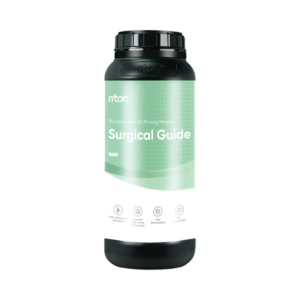
Model SG1.0 is a specialized photopolymer resin for producing surgical guides. The material is compatible with LCD/DLP 3D printers and supports 385–405 nm wavelength systems. Its transparent formulation provides balanced mechanical performance, biocompatibility, high-temperature sterilization capability, and efficient molding speed for dental applications.
We should not assume that every resin will respond identically at the same nominal wavelength. Material-specific exposure behavior directly affects polymerization boundaries, feature definition, and ultimately the accuracy of the printed component.
Control Post-Processing for Dimensional Stability
Printing is only one stage of the accuracy equation. After the part leaves the printer, washing, drying, support removal, and UV post-curing can influence the final geometry. If residual uncured resin remains on the surface, or if curing is inconsistent, the final component may not achieve the intended material state.
We therefore recommend treating post-curing as a controlled production step rather than an optional finishing task. The curing wavelength and exposure conditions should follow the material manufacturer’s validated instructions. Consistency is especially important for laboratories producing repeated cases, because uncontrolled post-processing can introduce variation between batches.
Riton describes Model SG1.0 as a specialized dental photopolymer resin for producing surgical guides. Printed models are resistant to yellowing, safe, odorless, and polishable, and feature high stability and mechanical strength. Mechanical properties and water absorption meet usage requirements.
Consider the Complete Printer-Resin System
When comparing dental 3D printing resin manufacturers, we recommend evaluating more than the resin bottle. The printer’s optical system, build parameters, slicing software, cleaning process, curing equipment, and material profile all contribute to repeatable results.
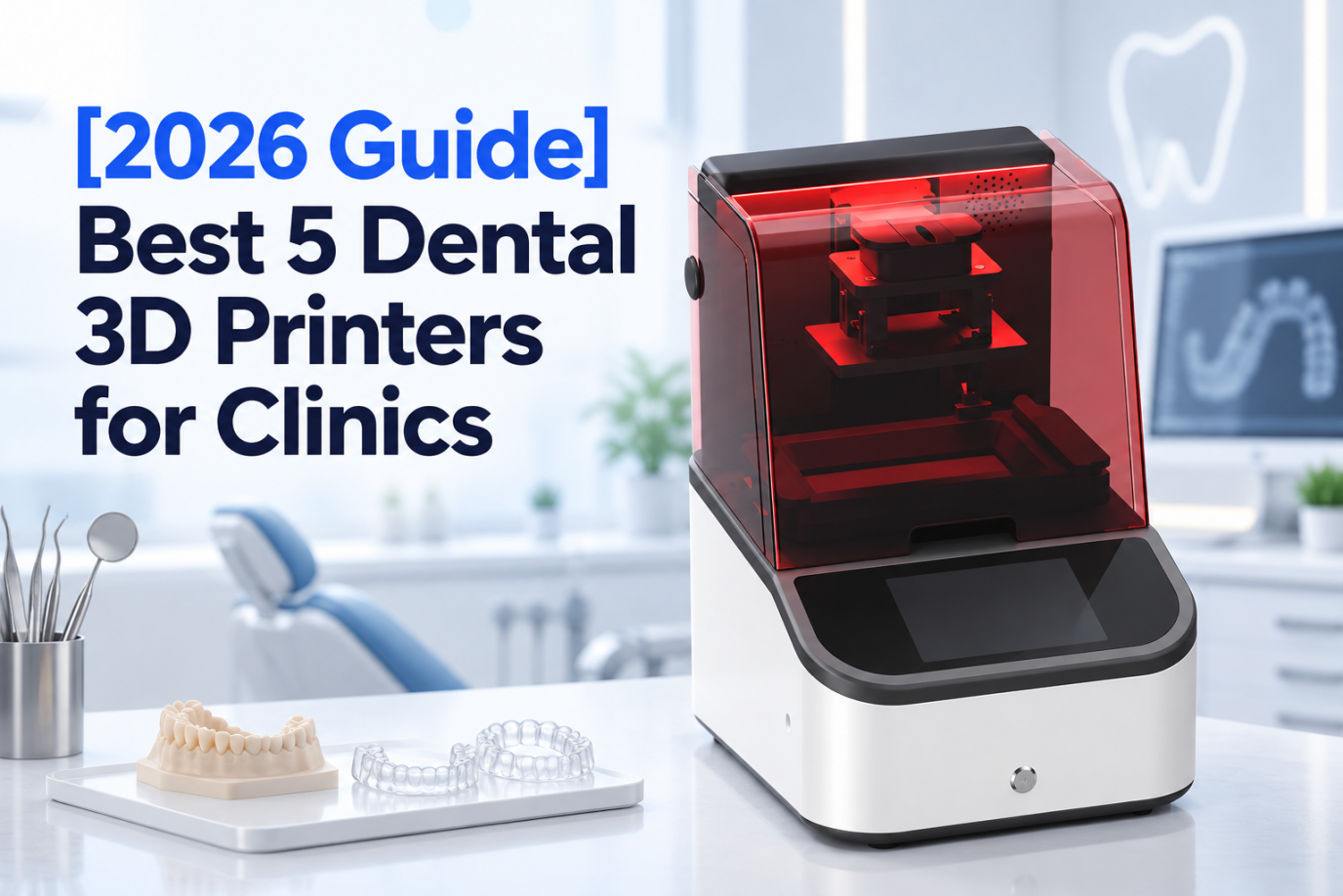
Riton’s resin printing portfolio includes the RXDent-L230 and RXDent-D130. The RXDent-L230 provides a 228 × 128 × 150 mm molding size and 30 μm pixel size, while the RXDent-D130 is designed around stability and production quality. Pairing compatible equipment and dental-specific materials can simplify parameter management and help laboratories build a more controlled workflow.
Accuracy also depends on selecting resin for the intended application. A model resin does not necessarily have the same performance requirements as a surgical guide resin, splint resin, or denture-base resin. We should therefore compare mechanical properties, water absorption, curing behavior, certification, and intended application before standardizing a material.
Build Repeatability into Production
Accuracy is valuable only when it can be repeated. For business dental laboratories, a material that produces one highly accurate print but varies between production runs is difficult to scale. We need stable resin storage, consistent printer calibration, controlled exposure parameters, standardized washing, and repeatable curing procedures.
Riton’s dental resin portfolio is specifically developed to support high printing success rates, precision, stability, and wear resistance. Multiple UV curing resin consumables in the portfolio have obtained certifications from organizations including NMPA and FDA, while individual products should always be evaluated according to their stated certification and intended use.
Making UV Curing Part of the Accuracy Strategy
UV curing resin affects dental 3D printing accuracy from initial exposure through final post-curing. We should match the resin to the printer’s wavelength, follow validated exposure parameters, control cleaning and curing, and select materials according to the clinical application.
At Riton, we combine dental-specific resins, resin 3D printers, curing equipment, and digital dental solutions to support professional production workflows. Model SG1.0 demonstrates our application-focused approach for surgical guides, with 385–405 nm compatibility, LCD/DLP applicability, and product features designed around mechanical performance and clinical workflow requirements. By treating resin and curing as part of one controlled system, we can help dental laboratories pursue greater consistency and precision.